Trading Glossary A-Z
Complete A-Z glossary of trading terms, forex definitions, and financial market concepts explained clearly for traders of all levels.
182 terms defined
Ask
BasicsThe ask price (also called the offer price) is the lowest price a seller is willing to accept for a financial instrument. When you buy (go long), your trade is executed at the ask price. The ask is always higher than the bid price, and the difference constitutes the spread, which is a key trading cost.
ATR (Average True Range)
Technical AnalysisThe Average True Range is a volatility indicator developed by J. Welles Wilder that measures the average range of price movement over a specified period. ATR does not indicate trend direction but shows how much an asset typically moves. Traders use ATR to set dynamic stop losses, determine position sizes, and identify changes in volatility that may signal breakouts.
Accumulation
Market StructureAccumulation is a market phase where large institutional investors quietly buy positions over time, typically during a period of consolidation or after a downtrend. It is characterized by a trading range with gradually increasing volume on up moves. The accumulation phase precedes a markup (uptrend) phase in Wyckoff market cycle theory and often appears as a flat or slightly rising price base.
Algorithmic Trading
PlatformsAlgorithmic trading (algo trading) uses computer programs to execute trades automatically based on predefined rules and mathematical models. Algorithms can process market data faster than humans, execute orders with precision, and eliminate emotional bias. In MetaTrader 5, algorithmic trading is implemented through Expert Advisors written in MQL5. It ranges from simple rule-based systems to complex machine learning models.
Arbitrage
Market StructureArbitrage is a trading strategy that exploits price differences of the same asset across different markets or brokers to make a risk-free profit. In forex, this can involve triangular arbitrage between three currency pairs or latency arbitrage between slow and fast brokers. True arbitrage opportunities are rare and short-lived in modern electronic markets due to high-speed automated systems.
Balance
BasicsBalance is the total amount of funds in your trading account, reflecting only closed trades. It does not include unrealized profits or losses from open positions. Your balance changes only when a trade is closed, a deposit is made, or a withdrawal is processed. The difference between balance and equity represents your floating P&L.
Bid
BasicsThe bid price is the highest price a buyer is willing to pay for a financial instrument at any given moment. When you sell (go short), your trade is executed at the bid price. The bid is always lower than the ask price, and the difference between them is the spread. Real-time bid prices reflect current market demand.
Base Currency
BasicsThe base currency is the first currency listed in a forex pair. In EUR/USD, the euro is the base currency. The exchange rate shows how much of the quote currency is required to purchase one unit of the base currency. When you buy a currency pair, you are buying the base currency and selling the quote currency.
Bollinger Bands
Technical AnalysisBollinger Bands are a volatility indicator consisting of a middle band (typically a 20-period SMA) and two outer bands set at two standard deviations above and below. When bands contract (squeeze), it signals low volatility and a potential breakout. When price touches or exceeds the outer bands, the market may be overextended and due for a mean reversion.
Breakeven
Risk ManagementBreakeven in trading refers to moving your stop loss to the entry price once a trade has moved a certain amount in your favor, eliminating the risk of loss on that position. This technique protects against reversals after initial favorable movement. Many traders set their stop to breakeven after the price reaches 1:1 risk-reward. It is also called a risk-free trade.
Buy Stop
Order TypesA buy stop is a pending order placed above the current market price. It is triggered when the ask price reaches the specified level, at which point it becomes a market buy order. Traders use buy stops to enter long positions on breakouts above resistance levels, expecting the upward momentum to continue once the level is broken.
Buy Limit
Order TypesA buy limit is a pending order placed below the current market price. It is executed when the ask price drops to the specified level. Traders use buy limits to enter long positions at a lower price, anticipating that the market will bounce from a support level or retrace before continuing upward. This order type ensures you buy at your desired price or better.
Bull Market
Market StructureA bull market is a market condition characterized by rising prices, optimism, and strong buying pressure. It is typically defined as a sustained price increase of 20% or more from a recent low. Bull markets are driven by strong economic fundamentals, positive sentiment, and increasing investor confidence. Traders in bull markets primarily look for buying opportunities on pullbacks.
Bear Market
Market StructureA bear market is a market condition characterized by falling prices, pessimism, and strong selling pressure. It is typically defined as a sustained price decline of 20% or more from a recent high. Bear markets are often associated with economic downturns, negative sentiment, and risk aversion. Traders in bear markets look for shorting opportunities on rallies.
Breakout
Market StructureA breakout occurs when the price moves decisively above a resistance level or below a support level, often accompanied by increased volume. Breakouts signal the start of a new trend or the continuation of an existing one. False breakouts (fakeouts) occur when the price temporarily breaks a level but quickly reverses. Confirmation through volume and candle close helps filter false signals.
Bonds
InstrumentsBonds are fixed-income debt securities issued by governments, municipalities, or corporations to raise capital. The issuer pays periodic interest (coupon) and returns the principal at maturity. Bond yields have a strong inverse relationship with prices and significantly influence currency markets. Rising bond yields typically strengthen the associated currency by attracting foreign capital seeking higher returns.
Backtesting
PlatformsBacktesting is the process of testing a trading strategy against historical market data to evaluate its performance. MetaTrader 5's Strategy Tester allows traders to backtest Expert Advisors across multiple timeframes and symbols with configurable parameters. Key metrics include net profit, drawdown, profit factor, and Sharpe ratio. Backtesting helps validate strategies before risking real capital.
Commission
BasicsA commission is a fixed fee charged by a broker for executing a trade, typically calculated per lot or per side of a transaction. ECN and STP brokers often charge commissions in exchange for tighter raw spreads. Commission-based accounts may offer better overall trading costs than spread-only accounts for active traders.
Cross Pair
BasicsA cross pair (or cross rate) is a forex currency pair that does not include the US dollar. Examples include EUR/GBP, EUR/JPY, and GBP/AUD. Cross pairs are derived from the individual exchange rates of each currency against the USD. They typically have wider spreads and lower liquidity compared to major pairs.
Currency Pair
BasicsA currency pair is a quotation of two different currencies, where one is quoted against the other. The first currency is the base currency and the second is the quote currency. For example, in EUR/USD = 1.0850, one euro buys 1.0850 US dollars. Currency pairs are the foundation of forex trading and are classified as majors, minors, or exotics.
Contract Size
BasicsContract size defines the quantity of the underlying asset represented by one standard lot in a trade. In forex, one standard lot equals 100,000 units of the base currency. For CFDs on indices or commodities, contract sizes vary by instrument. Understanding contract size is essential for accurate position sizing and risk calculation.
Carry Trade
BasicsA carry trade is a strategy where a trader borrows in a low-interest-rate currency and invests in a higher-interest-rate currency to profit from the interest rate differential. The trader earns positive swap payments for holding the position overnight. Carry trades work best in stable, low-volatility environments and can be disrupted by sudden risk-off moves.
Candlestick
Technical AnalysisA candlestick is a type of price chart that displays the open, high, low, and close prices for a given time period. Each candle has a body (showing open-to-close range) and wicks/shadows (showing high and low extremes). Candlestick patterns originated in 18th-century Japan and are the most popular chart type among modern traders for their visual clarity.
Chart Pattern
Technical AnalysisChart patterns are recognizable formations on price charts that signal potential future price movements. They are categorized as continuation patterns (flags, pennants, triangles) or reversal patterns (head and shoulders, double tops/bottoms). Chart patterns are based on the principle that historical price formations tend to repeat because market psychology remains consistent over time.
Convergence
Technical AnalysisConvergence occurs when the price and a technical indicator move in the same direction, confirming the strength of the current trend. It is the opposite of divergence and suggests the trend is likely to continue. In the context of MACD, convergence refers to the two moving averages coming closer together.
Consolidation
Market StructureConsolidation is a period of sideways price movement where the market trades within a defined range without establishing a clear trend. It occurs when buying and selling pressures are balanced. Consolidation often precedes a breakout and is characterized by decreasing volatility. Traders either trade the range boundaries or wait for a breakout to establish new positions.
CPI (Consumer Price Index)
Fundamental AnalysisThe Consumer Price Index measures the average change in prices paid by consumers for a basket of goods and services. It is the primary gauge of inflation and directly influences central bank monetary policy decisions. Higher-than-expected CPI readings typically strengthen the domestic currency as they increase the likelihood of interest rate hikes.
Central Bank
Fundamental AnalysisA central bank is the monetary authority responsible for managing a country's currency, money supply, and interest rates. Major central banks include the Federal Reserve (USD), European Central Bank (EUR), Bank of Japan (JPY), and Bank of England (GBP). Their policy decisions, speeches, and meeting minutes are the most influential fundamental events in forex trading.
Cognitive Bias
Trading PsychologyCognitive biases are systematic errors in thinking that affect trading decisions. Common biases include confirmation bias (seeking information that confirms existing beliefs), anchoring bias (over-relying on initial information), loss aversion (feeling losses more intensely than equivalent gains), and recency bias (overweighting recent events). Awareness of these biases is the first step toward mitigating their impact on trading.
Confirmation Bias
Trading PsychologyConfirmation bias is the tendency to seek, interpret, and remember information that supports your existing beliefs or trade thesis while ignoring contradictory evidence. In trading, this can lead to holding losing positions too long, dismissing warning signs, or cherry-picking indicators that support your directional bias. Combat this by actively looking for reasons your trade thesis could be wrong.
CFD (Contract for Difference)
InstrumentsA CFD is a financial derivative that allows traders to speculate on price movements of an underlying asset without owning it. When you trade a CFD, you exchange the difference in price between opening and closing the position. CFDs are available on forex, stocks, indices, commodities, and cryptocurrencies. They offer leverage but also carry the risk of losses exceeding the initial investment.
Commodities
InstrumentsCommodities are raw materials or primary agricultural products traded on financial markets. They are categorized as hard commodities (gold, silver, oil, copper) and soft commodities (wheat, coffee, sugar, cotton). Commodity prices are influenced by supply and demand, geopolitical events, weather, and currency movements. They are traded via futures, CFDs, and ETFs.
Cryptocurrency
InstrumentsCryptocurrencies are digital or virtual currencies secured by cryptography that operate on decentralized blockchain networks. Bitcoin (BTC) and Ethereum (ETH) are the most widely traded. Crypto markets operate 24/7 and are known for extreme volatility. Many forex brokers now offer cryptocurrency CFDs, allowing traders to speculate on crypto prices with leverage through platforms like MetaTrader 5.
Correlation
Risk ManagementCorrelation measures the statistical relationship between two financial instruments on a scale from -1 to +1. A correlation of +1 means they move identically, -1 means they move in opposite directions, and 0 means no relationship. EUR/USD and GBP/USD are positively correlated, while EUR/USD and USD/CHF are negatively correlated. Understanding correlation helps avoid concentrated risk from correlated positions.
Drawdown
BasicsDrawdown measures the decline in account equity from a peak to a subsequent trough, expressed as a percentage or dollar amount. Maximum drawdown is the largest peak-to-trough decline experienced over a period. It is a critical risk metric used to evaluate trading strategies and is a key parameter in prop firm challenges and risk management plans.
Doji
Technical AnalysisA doji is a candlestick pattern where the opening and closing prices are virtually equal, creating a very small or nonexistent body with upper and lower shadows. It signals market indecision and potential reversal, especially after a strong trend. Variations include the dragonfly doji, gravestone doji, and long-legged doji, each with specific implications.
Double Top
Technical AnalysisA double top is a bearish reversal chart pattern that forms after an uptrend when the price reaches a resistance level twice and fails to break through. The pattern resembles the letter M and is confirmed when the price breaks below the support level between the two peaks. The projected downside target equals the height of the pattern.
Double Bottom
Technical AnalysisA double bottom is a bullish reversal chart pattern that forms after a downtrend when the price tests a support level twice and holds. The pattern resembles the letter W and is confirmed when the price breaks above the resistance level between the two troughs. The projected upside target equals the height of the pattern from support to resistance.
Divergence
Technical AnalysisDivergence occurs when the price of an asset moves in the opposite direction of a technical indicator, such as the RSI or MACD. Bullish divergence (price makes lower lows while indicator makes higher lows) suggests weakening downward momentum. Bearish divergence (price makes higher highs while indicator makes lower highs) signals weakening upward momentum and a potential reversal.
Death Cross
Technical AnalysisA death cross is a bearish technical signal that occurs when a shorter-term moving average (typically the 50-day SMA) crosses below a longer-term moving average (typically the 200-day SMA). It suggests that short-term momentum is turning bearish relative to the long-term trend. While often viewed as a major sell signal, it is a lagging indicator and can sometimes produce false signals.
Diversification
Risk ManagementDiversification is a risk management strategy that involves spreading investments across different financial instruments, asset classes, or markets to reduce overall portfolio risk. In trading, it means not concentrating all capital in a single position or correlated pairs. Diversification reduces the impact of any single losing trade on your total account equity.
Distribution
Market StructureDistribution is a market phase where large institutional investors sell their positions over time, typically during a period of consolidation near a market top. It is characterized by a trading range with increasing volume on down moves. The distribution phase precedes a markdown (downtrend) phase in Wyckoff market cycle theory and often appears as a flat or slightly declining price ceiling.
Demo Account
PlatformsA demo account is a simulated trading account that uses virtual money to replicate real market conditions. It allows traders to practice strategies, learn the platform, and test Expert Advisors without risking real capital. Demo accounts provide access to real-time price data and full platform functionality. They are essential for beginners and for testing new strategies before live deployment.
Day Trading
BasicsDay trading is a strategy where all positions are opened and closed within the same trading day, avoiding overnight exposure and swap fees. Day traders rely on technical analysis, intraday price patterns, and short-term momentum. This style requires significant screen time, fast decision-making, and strict risk management. Popular day trading instruments include forex majors, indices, and highly liquid stocks.
Depth of Market (DOM)
Market StructureDepth of Market displays the pending buy and sell orders at different price levels for a specific instrument. It shows the available liquidity and potential support/resistance based on order concentration. In MetaTrader 5, DOM is available for exchange-traded instruments and provides insight into market microstructure. Large orders at specific levels can act as price barriers.
Drawdown Recovery
Risk ManagementDrawdown recovery refers to the percentage gain needed to recover from a drawdown and return to the previous equity peak. Due to the asymmetric nature of percentage losses and gains, larger drawdowns require disproportionately larger recoveries: a 10% loss needs an 11.1% gain, a 25% loss needs 33.3%, and a 50% loss requires 100% to break even. This asymmetry underscores the importance of capital preservation.
Drawdown Limit
Risk ManagementA drawdown limit is the maximum allowed decline in account equity before trading privileges are revoked or positions are automatically closed. It is commonly used by prop firms, which set daily drawdown limits (e.g., 5%) and maximum total drawdown limits (e.g., 10%). Traders who breach these limits fail the evaluation or lose their funded account. Drawdown limits enforce disciplined risk management.
Equity
BasicsEquity is the total value of your trading account, calculated as your balance plus or minus the unrealized profit or loss from all open positions. It represents the real-time value of your account and is used to calculate margin level and determine whether a margin call is triggered. Equity fluctuates with every market tick while positions are open.
Exotic Pair
BasicsExotic pairs consist of one major currency paired with the currency of a developing or smaller economy, such as USD/TRY, EUR/ZAR, or GBP/SGD. They feature significantly wider spreads, lower liquidity, and higher volatility compared to major and minor pairs. Exotic pairs also tend to have higher swap costs and are more susceptible to sudden price gaps.
Exponential Moving Average (EMA)
Technical AnalysisThe Exponential Moving Average gives greater weight to recent prices, making it more responsive to new information than the SMA. The 20 EMA and 50 EMA are popular choices for short-to-medium-term trading. EMAs react faster to price changes, which can be advantageous for identifying early trend shifts but may also produce more false signals in choppy markets.
Engulfing Pattern
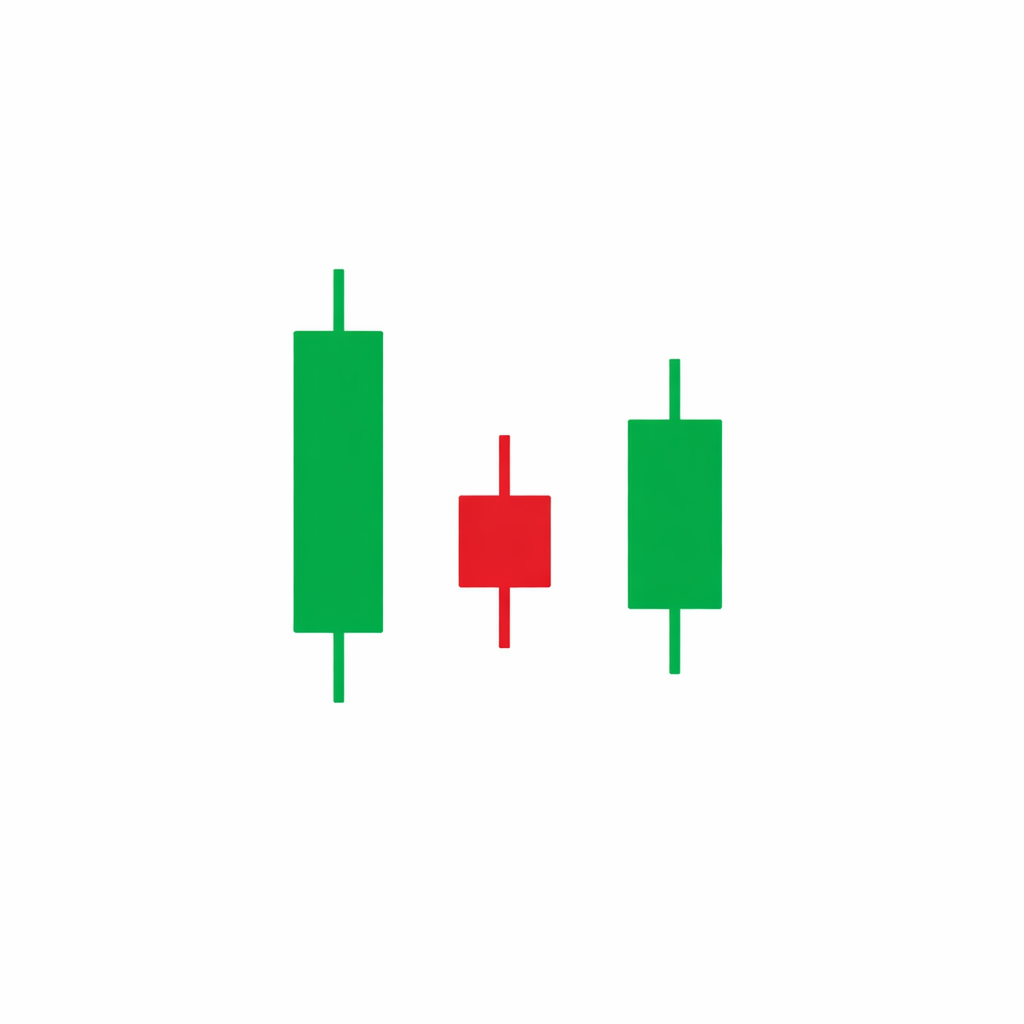
Technical AnalysisAn engulfing pattern is a two-candlestick reversal pattern. A bullish engulfing occurs when a small bearish candle is followed by a larger bullish candle that completely engulfs the previous body, signaling a potential upward reversal. A bearish engulfing is the opposite. This pattern is most significant when it appears at key support or resistance levels.
Expected Value
Risk ManagementExpected value (EV) is a statistical concept that calculates the average outcome of a trade over many repetitions. It is computed as (win rate x average win) - (loss rate x average loss). A positive expected value means the strategy is profitable over time. Traders must ensure their system has positive EV before risking real capital, regardless of individual trade outcomes.
ECN (Electronic Communication Network)
Market StructureAn ECN broker provides direct access to a network of liquidity providers (banks, institutions, other traders) where orders are matched automatically. ECN brokers offer raw spreads with no markup, charging a fixed commission per trade instead. They provide greater transparency, deeper liquidity, and no dealing desk intervention. ECN execution is preferred by scalpers and high-frequency traders.
Economic Calendar
Fundamental AnalysisAn economic calendar is a schedule of upcoming economic data releases, central bank meetings, and other market-moving events. Each event is typically rated by its expected market impact (high, medium, low). Traders use the economic calendar to plan around high-impact events, avoid unexpected volatility, or implement news trading strategies around data releases.
ETF (Exchange-Traded Fund)
InstrumentsAn Exchange-Traded Fund is an investment fund that trades on a stock exchange like a regular stock. ETFs track the performance of an index, commodity, sector, or other asset class. They offer diversification, low costs, and intraday trading flexibility. Popular ETFs include SPY (S&P 500), QQQ (NASDAQ), and GLD (gold). Some brokers offer ETF CFDs for leveraged trading.
Expert Advisor (EA)
PlatformsAn Expert Advisor is an automated trading program that runs on the MetaTrader platform. EAs execute trades based on predefined rules and algorithms without manual intervention. They can monitor markets 24/7, execute complex strategies, manage multiple positions, and eliminate emotional decision-making. EAs are written in MQL5 for MetaTrader 5 and can be optimized using the built-in strategy tester.
EA
PlatformsEA is the abbreviation for Expert Advisor, an automated trading robot that operates on the MetaTrader platform. EAs analyze market conditions using technical indicators and custom logic, then execute trades automatically based on their programming. They range from simple scripts that manage a single strategy to complex systems handling multiple instruments and risk management rules simultaneously.
Execution Speed
PlatformsExecution speed is the time between when an order is submitted and when it is filled by the broker. Measured in milliseconds, faster execution reduces slippage risk and is critical for scalpers and algorithmic traders. Factors affecting execution speed include server location, broker technology, internet latency, and market conditions. ECN brokers and VPS hosting typically offer the fastest execution.
Free Margin
BasicsFree margin is the amount of equity in your trading account that is not being used as margin for open positions. It represents the funds available to open new trades or absorb floating losses. Free margin is calculated as equity minus used margin. When free margin reaches zero or below, new positions cannot be opened and a margin call may occur.
Fibonacci Retracement
Technical AnalysisFibonacci retracement is a technical analysis tool that uses horizontal lines at key Fibonacci ratios (23.6%, 38.2%, 50%, 61.8%, 78.6%) to identify potential support and resistance levels during a price pullback. These levels are derived from the Fibonacci sequence and are widely used to predict where price corrections may end before the trend resumes.
FOK (Fill or Kill)
Order TypesA Fill or Kill order must be executed in its entirety immediately, or it is cancelled (killed) completely. Unlike IOC orders, partial fills are not accepted. FOK orders are used when a trader requires the exact quantity at the specified price or better and would rather have no execution than a partial one. They are primarily used by institutional traders.
Fiscal Policy
Fundamental AnalysisFiscal policy refers to government decisions about taxation and spending that influence the economy. Expansionary fiscal policy (increased spending, tax cuts) stimulates economic growth but may increase debt and inflation. Contractionary fiscal policy (reduced spending, tax increases) slows growth but can reduce deficits. Fiscal policy impacts currency values through its effect on economic growth and inflation expectations.
Fundamental Analysis
Fundamental AnalysisFundamental analysis evaluates the intrinsic value of a financial instrument by examining economic, financial, and geopolitical factors. In forex, this includes GDP, inflation, interest rates, employment data, and central bank policies. Fundamental analysts seek to determine whether a currency is overvalued or undervalued relative to its economic fundamentals, informing longer-term trading decisions.
FOMO (Fear of Missing Out)
Trading PsychologyFOMO is the anxiety-driven urge to enter a trade after seeing a significant price movement, fearing that the opportunity will be missed. It often leads to impulsive entries at unfavorable prices, chasing moves that have already played out. Disciplined traders combat FOMO by sticking to their trading plan and accepting that not every move needs to be traded.
Forex
InstrumentsForex (foreign exchange) is the global decentralized market for trading currencies. It is the largest financial market in the world, with a daily trading volume exceeding $7 trillion. Forex operates 24 hours a day, five days a week, across major financial centers in London, New York, Tokyo, and Sydney. Currency pairs are traded in lots, with leverage allowing traders to control larger positions.
Futures
InstrumentsFutures are standardized contracts to buy or sell an asset at a predetermined price on a specific date in the future. They are traded on regulated exchanges (CME, ICE) and are used for hedging and speculation. Unlike CFDs, futures have set expiration dates and contract sizes. They are popular for trading commodities, indices, and currencies with high liquidity and transparency.
Forward Testing
PlatformsForward testing (also called paper trading or walk-forward testing) is the process of evaluating a trading strategy on live or simulated market data in real time, after it has passed backtesting. It validates that backtested results hold up under current market conditions. Demo accounts are commonly used for forward testing, providing risk-free validation before committing real capital.
Golden Cross
Technical AnalysisA golden cross is a bullish technical signal that occurs when a shorter-term moving average (typically the 50-day SMA) crosses above a longer-term moving average (typically the 200-day SMA). It indicates that short-term momentum is turning bullish relative to the long-term trend. The golden cross is considered a major buy signal by many traders and is the opposite of a death cross.
GTC (Good Till Cancelled)
Order TypesA Good Till Cancelled order remains active in the market until it is either executed or manually cancelled by the trader. Unlike day orders that expire at the end of the trading session, GTC orders persist indefinitely. They are commonly used for limit orders at key technical levels where the trader is willing to wait for the price to reach their desired entry point.
GDP (Gross Domestic Product)
Fundamental AnalysisGross Domestic Product is the total monetary value of all goods and services produced within a country's borders during a specific period. It is the broadest measure of economic health and growth. GDP reports that exceed expectations generally strengthen the domestic currency, while disappointing figures weaken it. GDP is released quarterly in most countries.
Gold (XAU/USD)
InstrumentsGold is one of the most traded commodities in the world, quoted as XAU/USD in forex markets. It is considered a safe-haven asset that tends to rise during economic uncertainty, inflation, and geopolitical tensions. Gold has an inverse correlation with the US dollar and is influenced by real interest rates, central bank reserves, and investor sentiment. A standard lot of gold is 100 troy ounces.
Gap
Market StructureA gap is a price area on a chart where no trading occurs, creating a visible space between two consecutive candles. Gaps typically occur at market open (especially after weekends in forex), during major news events, or due to low liquidity. Common gap types include breakaway gaps (start of a new trend), continuation gaps, and exhaustion gaps (near the end of a trend). Many traders believe gaps tend to be filled.
Grid Trading
BasicsGrid trading is a strategy that places multiple buy and sell orders at regular price intervals above and below a set price, creating a grid of orders. As the price oscillates, orders are triggered and profits are captured. Grid trading works well in ranging markets but can accumulate large losses during strong trends if not properly managed with stop losses and maximum exposure limits.
Hammer
Technical AnalysisA hammer is a bullish reversal candlestick pattern that forms at the bottom of a downtrend. It has a small body near the top and a long lower shadow (at least twice the body length), indicating that sellers drove the price down during the session but buyers pushed it back up. The inverted hammer is its counterpart with a long upper shadow.
Head and Shoulders
Technical AnalysisHead and shoulders is a bearish reversal chart pattern consisting of three peaks: a higher middle peak (head) flanked by two lower peaks (shoulders). The neckline connects the troughs between the peaks. A break below the neckline confirms the pattern and projects a downside target equal to the distance from the head to the neckline. An inverse version signals bullish reversal.
Hedging
Risk ManagementHedging is a risk management strategy where a trader opens an opposite position to reduce or offset the risk of an existing position. In forex, this might mean opening a sell position on the same pair where you already have a buy position. While hedging limits potential losses, it also caps potential gains and increases trading costs through additional spreads and swaps.
Indicator
Technical AnalysisA technical indicator is a mathematical calculation based on price, volume, or open interest data that helps traders analyze market conditions and make trading decisions. Indicators are categorized as trend indicators (moving averages, MACD), momentum indicators (RSI, Stochastic), volatility indicators (Bollinger Bands, ATR), and volume indicators. They are applied as overlays or in separate chart panels.
Ichimoku Cloud
Technical AnalysisThe Ichimoku Kinko Hyo (Ichimoku Cloud) is a comprehensive technical indicator that provides information about support/resistance, trend direction, momentum, and trading signals in a single view. It consists of five lines: Tenkan-sen, Kijun-sen, Senkou Span A, Senkou Span B, and Chikou Span. The cloud (Kumo) between Senkou A and B acts as dynamic support and resistance.
IOC (Immediate or Cancel)
Order TypesAn Immediate or Cancel order must be filled immediately, either entirely or partially. Any portion of the order that cannot be filled immediately is cancelled. IOC orders are used by traders who want quick execution but do not want unfilled portions to remain as open orders. They are common in fast-moving markets where delays could result in unfavorable prices.
Interest Rate
Fundamental AnalysisInterest rates set by central banks are the primary driver of currency valuations in forex trading. Higher interest rates attract foreign capital seeking better returns, strengthening the domestic currency. Lower rates have the opposite effect. Central bank interest rate decisions and forward guidance are among the most impactful events for forex traders.
Inflation
Fundamental AnalysisInflation is the rate at which the general price level of goods and services rises, eroding purchasing power. Moderate inflation (around 2%) is targeted by most central banks as healthy for economic growth. Higher inflation typically leads to interest rate hikes (bullish for currency), while low inflation or deflation may trigger rate cuts or quantitative easing (bearish for currency).
Indices
InstrumentsAn index (plural: indices) is a statistical measure of the performance of a group of stocks representing a market segment. Major indices include the S&P 500, Dow Jones, NASDAQ, DAX, and FTSE 100. Traders access indices through CFDs, futures, and ETFs. Index trading provides exposure to an entire market sector without needing to trade individual stocks.
Lot
BasicsA lot is a standardized unit of measurement for the quantity of a financial instrument in a trade. In forex, a standard lot equals 100,000 units of the base currency. Mini lots (10,000 units), micro lots (1,000 units), and nano lots (100 units) are also available, allowing traders to adjust their position sizes for precise risk management.
Leverage
BasicsLeverage allows traders to control a larger position size with a smaller amount of capital by borrowing funds from the broker. Expressed as a ratio (e.g., 1:100), it means controlling $100,000 with just $1,000 of margin. While leverage amplifies potential profits, it equally magnifies potential losses and increases risk exposure.
Limit Order
Order TypesA limit order is an instruction to buy or sell at a specified price or better. A buy limit is placed below the current price, while a sell limit is placed above. Limit orders guarantee the execution price but not execution itself, as the market must reach the specified level. They are preferred when traders want to enter at a specific price rather than the current market price.
Liquidity
Market StructureLiquidity refers to how easily an asset can be bought or sold without significantly affecting its price. Highly liquid markets like EUR/USD have tight spreads and minimal slippage, while illiquid markets (exotic pairs, small-cap stocks) have wider spreads and greater price impact. Liquidity varies throughout the trading day, peaking during the London-New York session overlap.
Loss Aversion
Trading PsychologyLoss aversion is a psychological tendency where the pain of losing money is felt approximately twice as intensely as the pleasure of gaining an equivalent amount. In trading, loss aversion causes traders to hold losing positions too long (hoping for recovery) and close winning positions too early (to lock in gains). This behavior damages risk-reward ratios and overall profitability.
Live Account
PlatformsA live account (also called a real or funded account) is a trading account where real money is deposited and actual trades are executed in the financial markets. Unlike demo accounts, live accounts involve real financial risk and real emotions. The transition from demo to live trading is a critical step that requires adequate preparation, a tested strategy, and proper risk management.
Long Position
BasicsA long position is a trade where you buy an instrument expecting its price to rise. You profit when the price increases and incur losses when it decreases. In forex, going long on EUR/USD means buying euros and selling dollars. The term 'going long' simply means buying with the expectation of selling at a higher price later.
Lot Step
BasicsLot step is the minimum increment by which a trading volume can be increased or decreased when placing an order. For example, if the lot step is 0.01, you can trade 0.01, 0.02, 0.03 lots, etc., but not 0.015. Lot step varies by broker and instrument and is important for precise position sizing calculations. In MetaTrader 5, it is provided in the symbol properties.
Margin
BasicsMargin is the amount of capital required in your trading account to open and maintain a leveraged position. It acts as collateral or a good-faith deposit, not a transaction fee. Required margin is calculated based on the trade size and leverage ratio. If your equity falls below the required margin, you may receive a margin call.
Major Pair
BasicsMajor pairs are the most traded forex currency pairs, all including the US dollar paired with another major currency. The seven majors are EUR/USD, USD/JPY, GBP/USD, USD/CHF, AUD/USD, USD/CAD, and NZD/USD. They offer the tightest spreads, highest liquidity, and most predictable price action in the forex market.
Minor Pair
BasicsMinor pairs (also called cross currency pairs) are forex pairs that do not include the US dollar but involve other major currencies like EUR, GBP, or JPY. Examples include EUR/GBP, AUD/JPY, and GBP/CHF. They generally have wider spreads than majors but are still relatively liquid and popular among forex traders.
Margin Call
BasicsA margin call is a warning issued by your broker when your account equity falls below the required margin level, typically expressed as a percentage (e.g., 100% margin level). It signals that your account is at risk and you need to either deposit additional funds or close positions. If equity continues to decline, the broker may force-close positions at the stop-out level.
Moving Average
Technical AnalysisA moving average (MA) is a technical indicator that smooths price data by calculating the average closing price over a specified number of periods. It helps identify trend direction and potential support/resistance levels. The two most common types are the Simple Moving Average (SMA) and the Exponential Moving Average (EMA). Crossovers between different MAs generate popular trading signals.
MACD (Moving Average Convergence Divergence)
Technical AnalysisThe MACD is a trend-following momentum indicator that shows the relationship between two exponential moving averages (typically the 12 and 26 EMA). The MACD line, signal line, and histogram work together to generate buy and sell signals. Bullish signals occur when the MACD crosses above the signal line, and bearish signals when it crosses below.
Momentum
Technical AnalysisMomentum measures the rate of change in price over a specific time period. Strong momentum indicates the trend is likely to continue, while declining momentum suggests potential weakening or reversal. Momentum indicators include RSI, MACD, Stochastic, and the Rate of Change (ROC). Momentum trading strategies aim to capitalize on the continuation of existing price trends.
Maximum Drawdown
Risk ManagementMaximum drawdown is the largest percentage decline in account equity from a peak to a subsequent trough over a defined period. It measures the worst-case loss scenario a trader or strategy has experienced. Prop firms typically set maximum drawdown limits (e.g., 10% of initial capital) as a risk control parameter. A lower maximum drawdown indicates better risk management.
Money Management
Risk ManagementMoney management is the process of managing your trading capital to maximize returns while controlling risk. It includes determining position sizes, setting risk percentages, allocating capital across strategies, and managing withdrawals. Money management is closely related to risk management but focuses more broadly on the overall growth and preservation of trading capital over time.
Market Order
Order TypesA market order is an instruction to buy or sell an instrument immediately at the best available price. Market orders guarantee execution but not the exact price, especially during volatile conditions where slippage may occur. They are the fastest order type and are used when immediate execution is more important than getting a specific price.
Market Maker
Market StructureA market maker is a broker or institution that provides liquidity by continuously quoting both bid and ask prices for a financial instrument. They profit from the spread and take the opposite side of client trades. Market maker brokers may have a conflict of interest with clients since they profit when clients lose. They are contrasted with ECN and STP brokers.
Monetary Policy
Fundamental AnalysisMonetary policy refers to the actions taken by a central bank to manage money supply and interest rates to achieve economic objectives like price stability and full employment. Hawkish policy (tightening) involves raising rates and reducing money supply, strengthening the currency. Dovish policy (easing) involves lowering rates and increasing money supply, typically weakening the currency.
MetaTrader 5 (MT5)
PlatformsMetaTrader 5 is a multi-asset trading platform developed by MetaQuotes Software for trading forex, stocks, futures, and CFDs. It offers advanced charting tools, technical indicators, algorithmic trading through Expert Advisors (EAs), strategy testing, and depth of market. MT5 is the successor to MT4, offering additional timeframes, order types, and an integrated economic calendar.
MT5
PlatformsMT5 is the commonly used abbreviation for MetaTrader 5, the advanced multi-asset trading platform by MetaQuotes. Compared to its predecessor MT4, MT5 offers more timeframes (21 vs 9), more order types (6 vs 4), a built-in economic calendar, depth of market, and netting position accounting in addition to hedging mode. MT5 uses the MQL5 programming language for custom indicators and Expert Advisors.
MQL5
PlatformsMQL5 (MetaQuotes Language 5) is the programming language used to develop Expert Advisors, custom indicators, scripts, and libraries for MetaTrader 5. Based on C++, it offers object-oriented programming, OpenCL support for GPU computing, and access to the MQL5 community marketplace. MQL5 provides comprehensive functions for market analysis, trade execution, and data visualization.
Margin Level
BasicsMargin level is the ratio of equity to used margin, expressed as a percentage. It is calculated as (Equity / Used Margin) x 100. A margin level of 500% means your equity is five times your used margin. Brokers use this metric to determine margin call (typically at 100%) and stop-out levels (typically at 20-50%). Monitoring margin level is essential for managing leveraged positions.
Multi-Timeframe Analysis
Technical AnalysisMulti-timeframe analysis is a technique where traders examine the same instrument across multiple chart timeframes to make better-informed trading decisions. Typically, a higher timeframe identifies the overall trend direction, a middle timeframe pinpoints the trading zone, and a lower timeframe provides precise entry signals. This approach improves trade quality by aligning entries with the dominant trend.
Martingale
Risk ManagementMartingale is a position sizing strategy where the trader doubles their position size after each losing trade, aiming to recover all losses with a single winning trade. While mathematically sound with unlimited capital, in practice it leads to catastrophic account blowups because consecutive losses grow exponentially. Most professional traders and risk managers strongly advise against using martingale strategies.
NDD (No Dealing Desk)
Market StructureNo Dealing Desk execution means the broker does not act as a counterparty to client trades. Instead, orders are routed directly to the interbank market or liquidity providers. Both ECN and STP brokers are NDD brokers. NDD execution eliminates the conflict of interest inherent in dealing desk models and provides more transparent pricing.
NFP (Non-Farm Payrolls)
Fundamental AnalysisNon-Farm Payrolls is a key US economic indicator released on the first Friday of each month by the Bureau of Labor Statistics. It reports the change in the number of employed people, excluding the farming sector. NFP releases cause significant volatility in forex, especially USD pairs. Traders often avoid opening positions before NFP or use the volatility for breakout strategies.
News Trading
Fundamental AnalysisNews trading is a strategy that capitalizes on the volatility created by scheduled economic data releases and unexpected news events. Traders either position before the news (directional bias) or trade the reaction after the data is released (momentum/breakout). News trading requires fast execution, understanding of economic indicators, and strict risk management due to increased slippage and spread widening.
Oscillator
Technical AnalysisAn oscillator is a type of technical indicator that fluctuates between fixed boundaries, typically 0 and 100. Oscillators like RSI, Stochastic, and CCI help identify overbought and oversold conditions, as well as potential divergences from price. They are most effective in ranging or sideways markets and can generate premature signals during strong trends.
Overbought
Technical AnalysisOverbought is a market condition where the price has risen significantly and may be due for a pullback or reversal. On the RSI, readings above 70 indicate overbought conditions. However, overbought does not necessarily mean the price will immediately reverse, as markets can remain overbought for extended periods during strong uptrends.
Oversold
Technical AnalysisOversold is a market condition where the price has fallen significantly and may be due for a bounce or reversal. On the RSI, readings below 30 indicate oversold conditions. Like overbought levels, oversold conditions can persist during strong downtrends. Oversold readings combined with bullish divergence provide stronger reversal signals.
OCO (One Cancels the Other)
Order TypesAn OCO order is a pair of conditional orders where the execution of one automatically cancels the other. It typically combines a limit order and a stop order on the same instrument. For example, a trader may set a take profit (limit) and stop loss (stop) as an OCO pair, ensuring that when one is triggered, the other is removed to prevent conflicting positions.
Overtrading
Trading PsychologyOvertrading occurs when a trader takes too many trades, either from boredom, greed, or a lack of discipline. It leads to excessive transaction costs, poor-quality setups, and emotional exhaustion. Signs of overtrading include trading outside your plan, taking trades without clear signals, and feeling the need to always be in the market. Setting a maximum number of daily trades can help prevent it.
Options
InstrumentsOptions are financial derivatives that give the holder the right, but not the obligation, to buy (call option) or sell (put option) an underlying asset at a specified price (strike price) before a certain date (expiration). Options are used for hedging, income generation, and speculation. They offer defined risk for buyers (limited to the premium paid) and are priced using complex models.
Order Flow
Market StructureOrder flow analysis examines the actual buy and sell orders entering the market to determine supply and demand dynamics. It goes beyond price charts to reveal the intentions of market participants, particularly institutional traders. Tools like depth of market (DOM), volume profile, and footprint charts provide order flow data. In forex, true order flow is limited due to the decentralized nature of the market.
Pip
BasicsA pip (percentage in point) is the smallest standard unit of price movement in forex trading. For most currency pairs, a pip equals 0.0001 (the fourth decimal place). For JPY pairs, a pip is 0.01 (the second decimal place). Pips are used to measure price changes, calculate profits and losses, and define spread costs.
Pipette
BasicsA pipette is a fractional pip, representing the fifth decimal place in most currency pairs (0.00001) or the third decimal place in JPY pairs (0.001). Pipettes allow brokers to offer tighter spreads and more precise pricing. They are sometimes called micro pips or fractional pips.
Point
BasicsA point is a unit of price measurement that varies by instrument. In forex on MetaTrader 5, one point equals 0.00001 for 5-digit brokers (equivalent to one pipette). For indices, one point typically equals 1.0 of the quoted price. The distinction between points and pips is important for correctly configuring stop losses and take profits on trading platforms.
Profit Factor
BasicsProfit factor is the ratio of gross profits to gross losses over a given period. A profit factor above 1.0 means the strategy is profitable overall. For example, a profit factor of 1.5 means $1.50 is earned for every $1.00 lost. It is one of the most important metrics for evaluating trading system performance alongside drawdown and win rate.
Pivot Point
Technical AnalysisPivot points are calculated support and resistance levels based on the previous period's high, low, and close prices. The central pivot (PP) acts as the primary reference, with multiple support (S1, S2, S3) and resistance (R1, R2, R3) levels above and below. They are widely used by day traders and floor traders to identify potential turning points and set intraday targets.
Position Sizing
Risk ManagementPosition sizing is the process of determining how many lots or units to trade based on your account size, risk tolerance, and the distance to your stop loss. Proper position sizing ensures you never risk more than a predetermined percentage of your account (typically 1-2%) on any single trade. It is one of the most critical aspects of risk management.
Pending Order
Order TypesA pending order is an instruction to open a trade when the price reaches a specified level in the future. There are four types: buy limit, sell limit, buy stop, and sell stop. Pending orders allow traders to set up entries in advance without monitoring the market continuously. In MetaTrader 5, pending orders also include buy stop limit and sell stop limit variants.
Pullback
Market StructureA pullback is a temporary price movement against the prevailing trend, offering potential entry opportunities in the trend direction. In an uptrend, a pullback is a brief decline before the price resumes its upward movement. Pullbacks differ from reversals in that they are shorter-lived and do not change the overall trend. Fibonacci retracement levels are commonly used to identify pullback targets.
PMI (Purchasing Managers Index)
Fundamental AnalysisThe Purchasing Managers Index is a survey-based economic indicator measuring business conditions in the manufacturing and services sectors. A PMI above 50 indicates economic expansion, while below 50 signals contraction. PMI data is released monthly and is one of the earliest indicators of economic health, making it closely watched by forex traders for its impact on currency values.
Position Trading
BasicsPosition trading is a long-term strategy where trades are held for weeks, months, or even years, based on fundamental analysis and major technical trends. Position traders focus on macroeconomic trends, central bank policies, and long-term chart patterns. This style requires patience, larger stop losses, and significant capital but demands the least daily time commitment of all trading styles.
Prop Firm
BasicsA proprietary trading firm (prop firm) provides traders with funded accounts in exchange for passing evaluation challenges that test profitability and risk management. Traders trade with the firm's capital and share profits (typically 70-90% to the trader). Prop firms impose rules like maximum daily drawdown, maximum total drawdown, and minimum trading days. They offer an alternative path for traders who lack sufficient personal capital.
Price Action
Technical AnalysisPrice action trading is a method of analysis that relies solely on raw price movement rather than lagging indicators. Traders interpret candlestick patterns, chart formations, support/resistance levels, and trend structure to make trading decisions. Price action is considered the purest form of technical analysis and is the foundation upon which all other indicators are built.
Quote Currency
BasicsThe quote currency is the second currency listed in a forex pair, also known as the counter currency or terms currency. In EUR/USD, the US dollar is the quote currency. The exchange rate tells you how much of the quote currency is needed to buy one unit of the base currency. Profits and losses are denominated in the quote currency.
Quantitative Easing
Fundamental AnalysisQuantitative easing (QE) is an unconventional monetary policy where a central bank purchases government bonds and other financial assets to inject money into the economy, lower interest rates, and stimulate lending. QE typically weakens the domestic currency by increasing money supply. The reverse process, quantitative tightening (QT), reduces the money supply and can strengthen the currency.
Rollover
BasicsRollover is the process of extending the settlement date of an open position to the next trading day. In forex, this occurs at 5:00 PM EST (New York close) and involves paying or receiving a swap fee based on interest rate differentials. Wednesday rollovers typically carry a triple swap to account for the weekend settlement gap.
Resistance
Technical AnalysisResistance is a price level where selling pressure is strong enough to prevent the price from rising further. It acts as a ceiling where supply exceeds demand, causing the price to reverse downward. Resistance levels are identified using previous highs, trendlines, and technical indicators. A decisive break above resistance can signal a bullish continuation.
RSI (Relative Strength Index)
Technical AnalysisThe Relative Strength Index is a momentum oscillator that measures the speed and magnitude of price changes on a scale of 0 to 100. Readings above 70 indicate overbought conditions, while readings below 30 suggest oversold conditions. Developed by J. Welles Wilder, the RSI is used to identify potential reversals, divergences, and trend strength confirmation.
Risk-Reward Ratio
Risk ManagementThe risk-reward ratio (RRR) compares the potential loss (risk) to the potential gain (reward) of a trade. A 1:2 ratio means risking $1 to potentially gain $2. A favorable risk-reward ratio (at least 1:1.5 or 1:2) allows traders to be profitable even with a win rate below 50%. It is calculated by dividing the distance to stop loss by the distance to take profit.
Risk Per Trade
Risk ManagementRisk per trade is the maximum amount of capital you are willing to lose on a single trade, typically expressed as a percentage of your account equity. Most professional traders risk between 0.5% and 2% per trade. This percentage, combined with the stop loss distance, determines the position size. Consistent risk per trade prevents catastrophic losses from any single trade.
Risk Management
Risk ManagementRisk management is the systematic process of identifying, assessing, and controlling financial risks in trading. It encompasses position sizing, stop loss placement, portfolio diversification, risk-reward ratios, and maximum drawdown limits. Effective risk management is widely considered more important than trade selection and is the primary differentiator between consistently profitable traders and those who fail.
Range
Market StructureA range is a price area bounded by a clearly defined support level (floor) and resistance level (ceiling) where the price oscillates back and forth. Range-bound markets lack a clear trend and are ideal for oscillator-based strategies. Traders buy near support and sell near resistance, or wait for a breakout from the range to signal a new trend.
Retracement
Market StructureA retracement is a temporary reversal in price within a larger trend, where the price moves back toward a previous level before continuing in the original direction. Retracements are measured using Fibonacci levels (23.6%, 38.2%, 50%, 61.8%). They are distinguished from reversals by their shorter duration and the expectation that the primary trend will resume.
Reversal
Market StructureA reversal is a change in the overall direction of a price trend, where an uptrend turns into a downtrend or vice versa. Reversals are identified through chart patterns (head and shoulders, double tops), indicator signals (divergence), and candlestick patterns. Distinguishing between a genuine reversal and a temporary pullback is one of the most challenging aspects of technical analysis.
Revenge Trading
Trading PsychologyRevenge trading is the emotionally driven behavior of taking impulsive trades to recover losses from a recent losing trade. It typically involves increasing position size, abandoning the trading plan, and making reckless decisions fueled by anger or frustration. Revenge trading almost always leads to larger losses and is one of the most destructive psychological patterns in trading.
Risk Tolerance
Trading PsychologyRisk tolerance is the degree of variability in returns and potential losses that a trader is willing to accept. It is influenced by factors like financial situation, trading experience, personality, and goals. Understanding your risk tolerance helps determine appropriate position sizes, leverage levels, and trading strategies. Trading beyond your risk tolerance leads to emotional decision-making and poor performance.
Risk-Free Rate
Fundamental AnalysisThe risk-free rate is the theoretical return on an investment with zero risk, typically represented by government treasury bills or bonds from stable economies. It serves as a benchmark for evaluating investment returns and is a key input in financial models like the Sharpe ratio. In forex, the risk-free rate differential between two countries influences carry trade returns and swap rates.
Requote
PlatformsA requote occurs when a broker cannot fill your order at the requested price and offers a new (usually worse) price instead. Requotes are common with market maker brokers during volatile market conditions or when prices move between your order and execution. ECN and STP brokers typically do not requote but may instead fill orders with slippage at the best available price.
Spread
BasicsThe spread is the difference between the bid (sell) price and the ask (buy) price of a financial instrument. It represents the primary transaction cost for traders and a source of revenue for brokers. Tighter spreads indicate higher liquidity and lower trading costs, while wider spreads are common during low-liquidity periods or high-volatility events.
Swap
BasicsA swap (also called rollover interest) is a fee charged or credited to your account for holding a position overnight. It reflects the interest rate differential between the two currencies in a forex pair. Swap rates can be positive (you earn interest) or negative (you pay interest), depending on the direction of your trade and prevailing interest rates.
Slippage
BasicsSlippage occurs when a trade is executed at a different price than expected, usually during periods of high volatility or low liquidity. It can be positive (better price) or negative (worse price). Slippage is common during major news releases, market openings, and when using market orders. Limit orders can help avoid negative slippage.
Stop Out
BasicsStop out is the margin level at which a broker automatically closes your losing positions to prevent further losses and protect against negative balance. The stop-out level varies by broker, typically set at 20-50% margin level. Positions are closed starting with the largest losing trade. Understanding your broker's stop-out level is essential for risk management.
Support
Technical AnalysisSupport is a price level where buying pressure is strong enough to prevent the price from declining further. It acts as a floor where demand exceeds supply, causing the price to bounce upward. Support levels are identified using previous lows, trendlines, moving averages, and Fibonacci retracements. A break below support often signals further downside momentum.
Simple Moving Average (SMA)
Technical AnalysisThe Simple Moving Average calculates the arithmetic mean of closing prices over a defined period. A 200-period SMA, for example, averages the last 200 closing prices and is widely used to determine long-term trend direction. SMAs give equal weight to all data points, making them smoother but slower to react to recent price changes compared to exponential moving averages.
Stochastic Oscillator
Technical AnalysisThe Stochastic Oscillator is a momentum indicator comparing a closing price to its price range over a specified period. It generates values between 0 and 100, with readings above 80 considered overbought and below 20 considered oversold. The %K and %D lines produce crossover signals. It was developed by George Lane and is especially effective in ranging markets.
Stop Loss
Risk ManagementA stop loss is a predefined price level at which a losing position is automatically closed to limit potential losses. It is the cornerstone of risk management in trading. Stop losses can be set at fixed pip distances, technical levels (support/resistance), or based on volatility (ATR). Never trading without a stop loss is a fundamental rule of disciplined trading.
Stop Order
Order TypesA stop order becomes a market order when the price reaches a specified trigger level. A buy stop is placed above the current price (to catch breakouts), while a sell stop is placed below (to trade breakdowns). Stop orders are used for breakout trading strategies and as stop losses. They guarantee execution once triggered but may experience slippage.
Sell Stop
Order TypesA sell stop is a pending order placed below the current market price. It is triggered when the bid price reaches the specified level, at which point it becomes a market sell order. Traders use sell stops to enter short positions on breakdowns below support levels, expecting the downward momentum to continue once the level is broken.
Sell Limit
Order TypesA sell limit is a pending order placed above the current market price. It is executed when the bid price rises to the specified level. Traders use sell limits to enter short positions at a higher price, anticipating that the market will reverse from a resistance level. This order type ensures you sell at your desired price or better.
STP (Straight Through Processing)
Market StructureSTP brokers route client orders directly to liquidity providers without manual intervention or a dealing desk. Orders are processed automatically, ensuring faster execution and reduced conflict of interest. STP brokers may add a markup to the raw spread or charge a commission. They offer a middle ground between market makers and pure ECN brokers.
Stocks
InstrumentsStocks (equities) represent ownership shares in a publicly traded company. Stock prices are driven by company earnings, economic conditions, and market sentiment. In the trading context, stocks can be traded directly on exchanges or via CFDs for leveraged exposure without ownership. MetaTrader 5 supports stock trading through compatible brokers.
Scalping
BasicsScalping is a high-frequency trading strategy that aims to profit from very small price movements, typically holding positions for seconds to minutes. Scalpers execute many trades per day, each targeting a few pips of profit. Success requires fast execution, tight spreads, strong discipline, and a broker that allows scalping. It is one of the most demanding trading styles.
Swing Trading
BasicsSwing trading is a strategy that aims to capture price swings over several days to weeks. Swing traders use technical analysis to identify entry points during pullbacks within a trend or at key support/resistance levels. This style requires less screen time than day trading and accommodates traders who cannot monitor the market continuously. Swap costs must be considered for overnight positions.
Short Selling
BasicsShort selling (going short) is the practice of selling a financial instrument you do not own, expecting its price to decline, with the intention of buying it back at a lower price for a profit. In forex and CFD trading, short selling is as straightforward as opening a sell position. Profits are made when the price falls, while losses occur if the price rises.
Spread Betting
InstrumentsSpread betting is a tax-free (in the UK and Ireland) form of derivative trading where you speculate on the direction of price movement without owning the underlying asset. Profits or losses are determined by how much the price moves in your favor or against you, multiplied by your stake per point. Spread betting is similar to CFD trading but with different tax treatment in certain jurisdictions.
Sharpe Ratio
Risk ManagementThe Sharpe ratio measures the risk-adjusted return of a trading strategy by calculating the excess return per unit of risk (standard deviation). A Sharpe ratio above 1.0 is considered good, above 2.0 is very good, and above 3.0 is excellent. It helps traders compare strategies with different risk profiles on an equal footing and is a standard metric in strategy evaluation and fund management.
Session
Market StructureA trading session refers to the active trading hours of a major financial center. The four main forex sessions are Sydney (Asian open), Tokyo (Asian prime), London (European), and New York (American). Each session has distinct volatility and liquidity characteristics. The London-New York overlap (13:00-17:00 GMT) is the most active period. Understanding sessions helps traders choose optimal trading times.
Swap-Free Account
PlatformsA swap-free account (Islamic account) is a trading account that does not charge or pay overnight swap fees, in compliance with Islamic finance principles (Sharia law) that prohibit interest (riba). Instead of swaps, some brokers may charge fixed administration fees or widen spreads. Swap-free accounts are available from most international forex brokers upon request.
Ticker
BasicsA ticker is an abbreviated symbol used to uniquely identify a financial instrument on a trading platform or exchange. For example, EURUSD represents the Euro vs US Dollar currency pair, and AAPL represents Apple stock. Tickers provide a standardized way to reference instruments across different platforms and markets.
Tick
BasicsA tick is the smallest possible price movement of a financial instrument on a trading platform. In forex, a tick may equal one pipette (0.00001 for most pairs). Each tick represents a single price update from the market. Tick data provides the highest resolution of price information and is used for precise analysis and scalping strategies.
Trend
Technical AnalysisA trend is the general direction in which the price of an asset is moving over time. An uptrend consists of higher highs and higher lows, while a downtrend features lower highs and lower lows. Trends can be short-term, medium-term, or long-term. The adage 'the trend is your friend' reflects the strategy of trading in the direction of the prevailing trend.
Trendline
Technical AnalysisA trendline is a straight line drawn on a chart connecting two or more price points, used to identify and confirm the direction of a trend. An ascending trendline connects higher lows in an uptrend, while a descending trendline connects lower highs in a downtrend. A break of a trendline often signals a potential trend change or acceleration.
Take Profit
Risk ManagementA take profit is a predefined price level at which a winning position is automatically closed to lock in gains. It helps traders secure profits without needing to monitor the market continuously. Take profit levels are typically set based on support/resistance levels, risk-reward ratios, or technical targets. Multiple take profit levels allow partial position closing at different targets.
Trailing Stop
Risk ManagementA trailing stop is a dynamic stop loss that automatically moves in the direction of a profitable trade while remaining fixed if the price reverses. For a long position, the trailing stop moves up as the price rises but stays in place when the price falls. It locks in profits while still allowing the trade to capture further gains. Trailing stops can be set in pips, price levels, or percentage terms.
Trade Balance
Fundamental AnalysisThe trade balance measures the difference between a country's exports and imports of goods and services. A trade surplus (exports exceed imports) is generally positive for the domestic currency as it indicates foreign demand. A trade deficit (imports exceed exports) can weaken the currency. Major commodity-exporting nations are particularly sensitive to trade balance data.
Trading Discipline
Trading PsychologyTrading discipline is the ability to consistently follow your trading plan, risk management rules, and strategy regardless of emotional impulses or recent outcomes. It involves patience to wait for high-probability setups, executing trades mechanically, and accepting losses as part of the process. Discipline is widely regarded as the most important trait separating successful traders from unsuccessful ones.
Trading Plan
Trading PsychologyA trading plan is a comprehensive document outlining your trading strategy, rules for entry and exit, risk management parameters, and performance goals. It defines which markets to trade, position sizing rules, maximum daily loss limits, and criteria for taking trades. A well-defined trading plan removes emotional decision-making and provides a framework for consistent execution.
Trading Journal
Trading PsychologyA trading journal is a detailed record of every trade taken, including entry/exit prices, position size, reasoning, screenshots, and emotional state. It serves as a tool for performance analysis, pattern recognition, and continuous improvement. Reviewing your journal regularly helps identify strengths, weaknesses, and recurring mistakes. Successful traders consider journaling an essential part of their routine.
Timeframe
Technical AnalysisA timeframe defines the period of time each candlestick or bar represents on a price chart. MetaTrader 5 offers 21 timeframes ranging from 1-minute (M1) to monthly (MN). Higher timeframes show broader trends and are less noisy, while lower timeframes provide more detail for short-term trading. Multi-timeframe analysis combines several timeframes for more complete market perspective.
Volume
Technical AnalysisVolume represents the total number of shares, contracts, or lots traded during a specific time period. High volume confirms the strength of a price move, while low volume may indicate a lack of conviction. In forex, true volume is not centralized, so tick volume (number of price changes) is used as a proxy on platforms like MetaTrader 5.
Volatility
Market StructureVolatility measures the degree of price variation over time. High volatility means larger and more rapid price swings, while low volatility indicates smaller, steadier price movements. Volatility is measured using indicators like ATR, Bollinger Bands, and standard deviation. It tends to increase during news events and market uncertainty, affecting spread width and stop loss placement.
VPS (Virtual Private Server)
PlatformsA VPS is a remote server that keeps your trading platform and Expert Advisors running 24/7 without relying on your local computer. Forex VPS services provide low-latency connections to broker servers, ensuring faster order execution and uninterrupted automated trading. They are essential for EA traders who need constant uptime and minimal connectivity issues.
Volume Profile
Technical AnalysisVolume profile is an advanced charting study that displays trading volume at specific price levels rather than over time. It reveals where the most trading activity occurred, identifying high-volume nodes (areas of acceptance) and low-volume nodes (areas of rejection). The point of control (POC) marks the price level with the highest traded volume and often acts as a significant support or resistance level.

Optimize Your Trading with Pulsar Terminal
All these calculators are built into Pulsar Terminal with real-time data from your MT5 account. One-click position sizing, automatic risk management, and instant calculations.
Get Pulsar Terminal