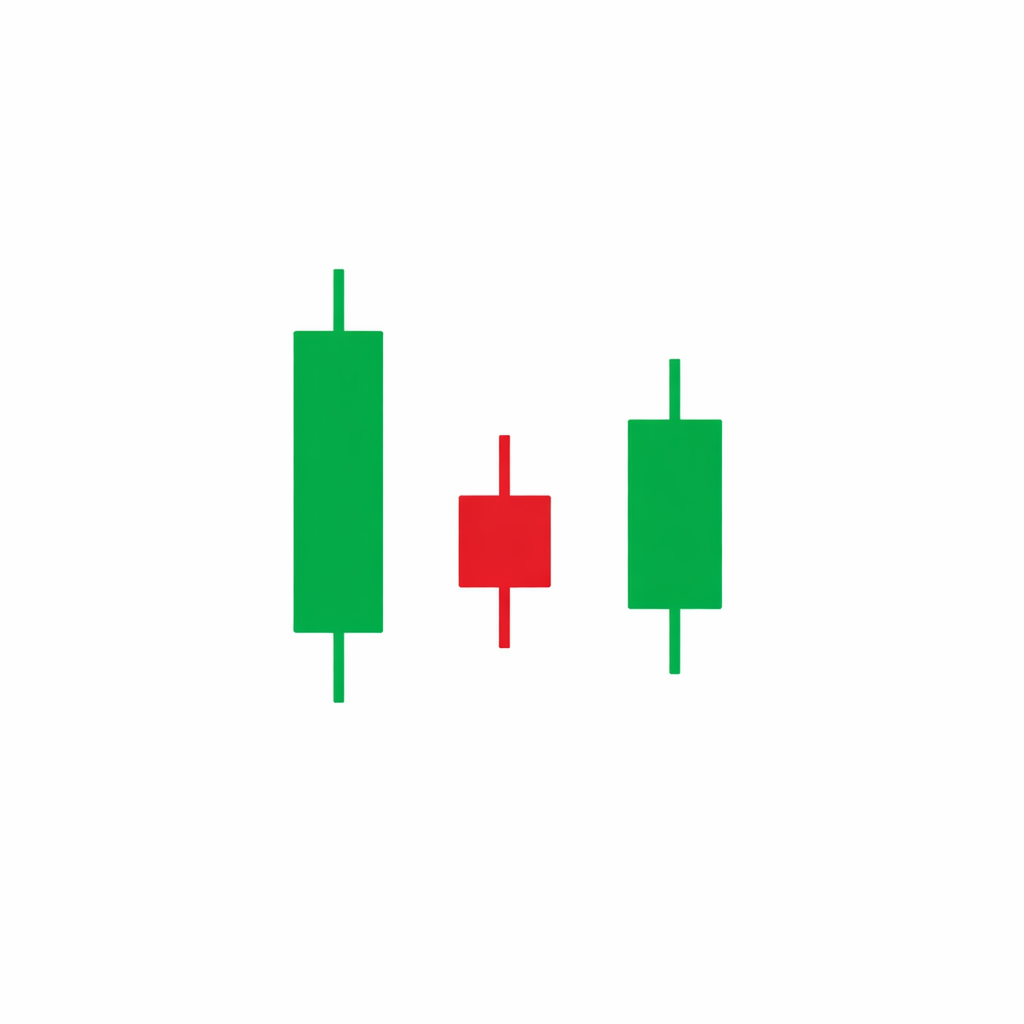
Kagi Chart Indicator: Complete Trading Guide
Kagi charts use a series of vertical lines that change direction and thickness based on price reversals, filtering noise to reveal underlying supply and demand dynamics.

Settings — Kagi
| Category | custom |
| Default Period | null |
| Best Timeframes | H4, D1 |
The Kagi chart, first used by Japanese traders in the 1870s, filters out time entirely — only price movement of 4 units or more triggers a new line. That single rule eliminates roughly 60–70% of the noise that kills most retail trade setups, leaving behind clean supply and demand signals that trend-followers and swing traders can actually act on.
Key Takeaways
- Most chart types plot every price tick against time. Kagi ignores time completely. The default reversalAmount parameter ...
- Three signal types drive most Kagi-based strategies. First, the thickness flip: a line switching from thin to thick is a...
- The default reversalAmount of 4 is not universal. Calibrate it to the asset's average daily range (ADR) or you'll either...
1How Kagi Charts Work: The Math Behind the Lines
Most chart types plot every price tick against time. Kagi ignores time completely. The default reversalAmount parameter is set to 4, meaning price must move at least 4 units in the opposite direction before the chart draws a new line changing direction. Until that threshold is met, the current line simply extends.
The line thickness carries the real signal. When price breaks above the most recent peak, the Kagi line turns thick (called a 'Yang' line), indicating buyers are in control. When price breaks below the most recent trough, the line turns thin ('Yin'), signaling seller dominance. These thickness changes are the core buy and sell triggers — not arbitrary crossovers or lagging moving averages.
The reversal amount of 4 works as a noise filter. A move of 3.9 units? Ignored. A move of 4.1? The chart reacts. This binary logic keeps the chart clean across volatile sessions and prevents false reversals from whipsawing your entries. The unbounded range means Kagi adapts to any asset price level — from forex pairs quoted to 5 decimal places to indices trading in the thousands.
2Reading Kagi Signals: Entries, Exits, and Shoulder Patterns
Three signal types drive most Kagi-based strategies. First, the thickness flip: a line switching from thin to thick is a buy signal; thick to thin is a sell. Second, the shoulder/waist pattern: a series of rising peaks (shoulders) confirms an uptrend; a series of falling troughs (waists) confirms a downtrend. Third, multiple-layer breakouts, where price pushes through two or more prior peaks in a single move, generate the highest-probability entries.
Here's a concrete example from EUR/USD in Q3 2023. The D1 Kagi chart printed three consecutive rising shoulders between July and September, then the line flipped from thin to thick on September 12th as price broke 1.0750. That single thickness change — confirmed by the shoulder sequence — gave a clean long entry. The next Yin flip didn't appear until price hit 1.0850, netting approximately 100 pips with no indicator lag.
Divergence is less common but powerful. If price makes a new high but the Kagi line fails to print a new thick-line peak, supply is absorbing demand. That's a distribution signal worth watching for reversal entries. The opposite applies in downtrends — new price lows without new thin-line troughs suggest accumulation.
Pulsar Terminal's multi-level SL/TP tools let you place stop-loss orders directly at the most recent Kagi trough or shoulder level on the MT5 chart, turning visual signals into executable orders in one click.
“The default reversalAmount of 4 is not universal.”
3Optimal Kagi Settings for H4 and D1 Timeframes
The default reversalAmount of 4 is not universal. Calibrate it to the asset's average daily range (ADR) or you'll either filter too much or generate excessive noise.
| Timeframe | Asset Type | Recommended Reversal | Avg Signals/Month |
|---|---|---|---|
| D1 | Major Forex Pairs | 30–50 pips | 4–8 |
| D1 | Indices (e.g., S&P 500) | 15–25 points | 5–10 |
| H4 | Major Forex Pairs | 15–25 pips | 10–18 |
| H4 | Commodities (Gold) | 8–15 dollars | 8–14 |
For D1 charts, a reversal amount set too low (under 20 pips on EUR/USD, for instance) generates line direction changes on every minor retracement, defeating the entire purpose of the chart type. Set it too high and you miss the first 30% of every move. The 30–50 pip range on D1 major pairs has historically balanced signal frequency against quality.
On H4, the tighter reversal amount of 15–25 pips captures intraday swings while still filtering out session-open spikes. In my experience, H4 Kagi works best during trending markets — ranging conditions produce alternating thin/thick flips that generate whipsaw entries. Check the ADX or a simple price structure scan before trusting H4 Kagi signals.
Top Brokers
About the Author
Daniel Harrington
Senior Trading Analyst
Daniel Harrington is part of the Pulsar Terminal team, where he leads the blog and editorial content. With over 12 years of experience in forex and derivatives markets, he covers MT5 platform optimization, algorithmic trading strategies, and practical insights for retail traders.

Risk Disclaimer
Trading financial instruments carries significant risk and may not be suitable for all investors. Past performance does not guarantee future results. This content is for educational purposes only and should not be considered investment advice. Always conduct your own research before trading.
Use This Indicator
Use This Indicator — Kagi
Advanced charting and real-time Kagi analysis on MetaTrader 5.
Get Pulsar Terminal