Volatility Ratio Indicator: Complete Trading Guide
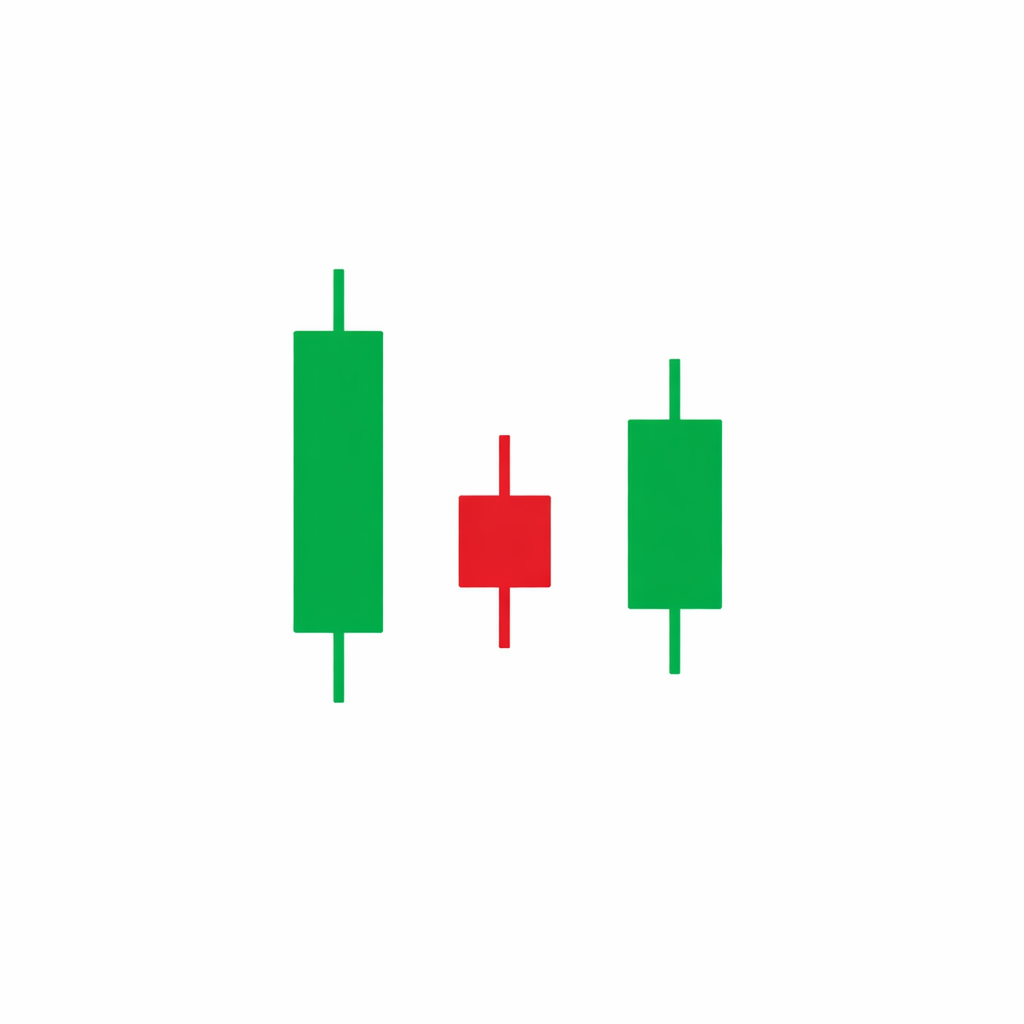
Volatility Ratio compares the current true range to the average true range, identifying potential breakout bars when the ratio exceeds a threshold.

Settings — VR
| Category | volatility |
| Default Period | 14 |
| Best Timeframes | H1, H4, D1 |
The Volatility Ratio (VR) measures price expansion by comparing the current true range to a 14-period average, producing values from 0 to theoretically unlimited — with readings above 1.0 signaling that price is moving faster than its recent norm. First formalized by Jack Schwager in the 1990s, the indicator has since become a standard breakout-detection tool across equities, forex, and futures markets.
Key Takeaways
- The math is direct. The indicator divides the current bar's true range (TR) by the average true range (ATR) over the def...
- Counterintuitively, a high VR reading alone is not a directional signal — it is a volatility signal. Direction still req...
- The default 14-period setting performs differently depending on the timeframe applied. On the D1 chart, 14 periods cover...
1How the Volatility Ratio Calculates Breakout Pressure
The math is direct. The indicator divides the current bar's true range (TR) by the average true range (ATR) over the default 14-period lookback window: VR = Current TR ÷ ATR(14). True range itself captures the widest price movement of a given bar, defined as the greatest of three values: current high minus current low, the absolute difference between current high and the prior close, or the absolute difference between current low and the prior close. A VR reading of 1.0 means the current bar's range exactly matches the 14-period average. A reading of 2.5 means the bar is two and a half times more volatile than normal — a statistically significant expansion. Because the denominator is a rolling average, the ratio self-normalizes across instruments. A EUR/USD bar worth 30 pips and a Gold bar worth $12 can both register a VR of 2.0, making direct comparisons meaningful. The unbounded ceiling matters: during flash crashes or major news events, VR can spike above 5.0 or even 10.0. These extreme readings are informative precisely because they are rare, occurring in fewer than 3% of bars on most liquid instruments under normal conditions.
2Signal Interpretation: What VR Readings Actually Mean
Counterintuitively, a high VR reading alone is not a directional signal — it is a volatility signal. Direction still requires price context. Three distinct signal types emerge from VR analysis. First, breakout confirmation: when VR crosses above 1.0 and price simultaneously closes beyond a defined support or resistance level, the expansion validates the move. Research from Schwager's 'Schwager on Futures: Technical Analysis' (1996) notes that breakouts accompanied by above-average range expansion show significantly higher follow-through rates than those occurring on subdued volatility. Second, exhaustion signals: a VR spike above 2.0 that occurs after an extended trend — rather than at its beginning — often marks a climactic bar. Price may gap or thrust sharply, then reverse. Traders watching for this pattern look for VR to peak and contract within 1-3 bars following the spike. Third, compression setups: sustained VR readings below 0.6 indicate range contraction, a condition historically preceding sharp directional moves. The Bollinger Band squeeze shares conceptual DNA with this reading. A concrete example: on EUR/USD daily charts in March 2020, VR spiked above 4.0 on multiple consecutive sessions as pandemic volatility hit markets. Entries taken on the first VR contraction back below 2.0, aligned with trend direction, captured significant directional moves as volatility normalized. Pulsar Terminal's chart-based SL/TP tools allow traders to set stop-loss levels at the opposite extreme of a high-VR bar directly on the chart, anchoring risk to the expansion bar's range rather than arbitrary pip distances.
“The default 14-period setting performs differently depending on the timeframe applied.”
3Optimal VR Settings Across H1, H4, and D1 Timeframes
The default 14-period setting performs differently depending on the timeframe applied. On the D1 chart, 14 periods covers approximately three calendar weeks of trading data — a window that captures medium-term volatility cycles without overreacting to single-day anomalies. The 1.0 threshold works reliably at this timeframe, with VR above 1.5 flagging genuinely significant expansion. On H4 charts, 14 periods spans roughly 2.5 trading days. Market microstructure noise increases, so many practitioners raise the breakout threshold to 1.3 rather than 1.0 to filter low-conviction signals. The compression floor also adjusts: readings below 0.5 on H4 are more common than on D1, making the sub-0.6 squeeze signal less selective. On H1 charts, 14 periods covers less than two full trading sessions. Intraday volatility patterns — including the London open surge and New York session overlap — routinely push VR above 1.0 without any structural significance. A period adjustment to 20 or 21 on H1 smooths the denominator enough to restore signal quality, or the threshold can be raised to 1.5 as an alternative. Across all timeframes, pairing VR with a trend filter — a 50-period EMA direction, for instance — prevents trading breakout signals against the prevailing structure. A VR spike in a downtrend is more reliably a continuation signal than a reversal.
Top Brokers
About the Author
Daniel Harrington
Senior Trading Analyst
Daniel Harrington is part of the Pulsar Terminal team, where he leads the blog and editorial content. With over 12 years of experience in forex and derivatives markets, he covers MT5 platform optimization, algorithmic trading strategies, and practical insights for retail traders.

Risk Disclaimer
Trading financial instruments carries significant risk and may not be suitable for all investors. Past performance does not guarantee future results. This content is for educational purposes only and should not be considered investment advice. Always conduct your own research before trading.
Use This Indicator
Use This Indicator — VR
Advanced charting and real-time VR analysis on MetaTrader 5.
Get Pulsar Terminal