Order Block Trading EURUSD: Strategy Guide
Trade Euro / US Dollar with Order Block Trading — Get Pulsar TerminalOrder Block Trading × EURUSD — Overview
| Strategy | Order Block Trading |
| Instrument | Euro / US Dollar (EURUSD) |
| Timeframes | M15, H1, H4 |
| Holding Period | Hours to days |
| Risk / Reward | 1:3 - 1:5 |
| Typical Spread | 1.2 pips |
| Contract Size | 100,000 |
Order block trading identifies institutional price zones where large market participants entered positions — and EURUSD, the world's most liquid forex pair, leaves some of the clearest institutional footprints available. With average daily ranges exceeding 70 pips and a spread of 1.2 pips, the pair offers enough movement to make 1:3 to 1:5 reward setups structurally viable. This guide breaks down how to apply the strategy across M15, H1, and H4 timeframes with precision.
Key Takeaways
- Counterintuitively, EURUSD's extreme liquidity makes it more predictable for order block traders — not less. Because ins...
- The three-timeframe structure — H4 for context, H1 for block identification, M15 for entry — is the operational backbone...
- Consider a scenario representative of conditions seen repeatedly during the first quarter of 2024, when EURUSD oscillate...
1Why Order Block Trading Works on EURUSD
Counterintuitively, EURUSD's extreme liquidity makes it more predictable for order block traders — not less. Because institutional volumes are so large, banks and funds cannot enter positions without leaving visible consolidation zones on the chart before a sharp directional move. These zones become order blocks: the last bullish or bearish candle before a significant displacement.
Research into institutional market microstructure, including work published by the Bank for International Settlements in its 2022 Triennial Survey, confirms that EURUSD accounts for roughly 22% of all global forex turnover. That concentration means institutional order flow is dense, repetitive, and — for a trained eye — readable.
The 1.2-pip spread matters here. On a 1:3 risk/reward setup targeting 30 pips, the spread represents 4% of the profit target — manageable. At 1:5, targeting 50 pips, it shrinks to 2.4%. Tighter reward targets below 20 pips make the spread disproportionately costly, which is why this strategy pairs best with the higher R:R ratios it advertises.
2Optimal Timeframe Settings for EURUSD Order Blocks
The three-timeframe structure — H4 for context, H1 for block identification, M15 for entry — is the operational backbone of this approach on EURUSD.
On H4, identify the prevailing market structure: is price making higher highs and higher lows, or the reverse? This determines whether to hunt bullish or bearish order blocks exclusively. Mixing bias directions is a common error that degrades win rate.
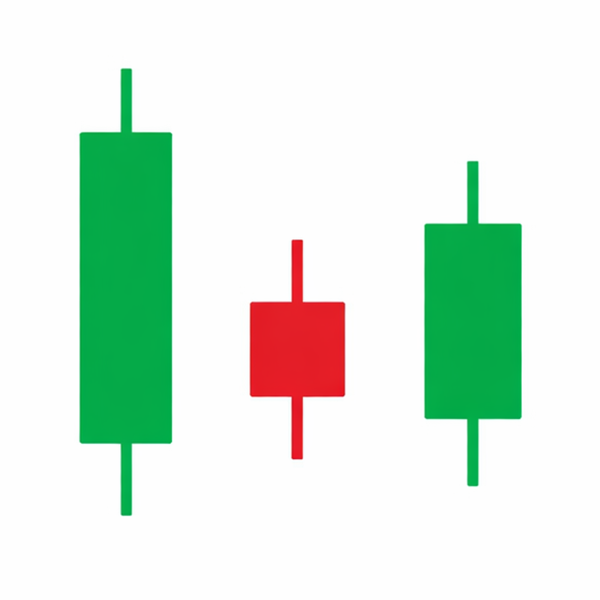
On H1, locate the order block itself. A valid bullish order block is the last red (bearish) candle before a strong upward displacement that breaks a prior swing high. The block's range — from its open to its close — becomes the entry zone. For EURUSD, H1 order blocks typically span 8–18 pips, giving a clear stop-loss anchor roughly 3–5 pips below the block's low (accounting for spread and minor wicks).
M15 provides the entry trigger. Wait for price to return to the H1 order block and watch for one of three confirmations: a bullish engulfing candle, a rejection wick closing above the block's midpoint, or a break of a short-term M15 structure high formed during the retest. Entering on confirmation rather than the first touch reduces false entries — a documented benefit in Smart Money Concept (SMC) literature.
Stop-loss placement sits 3–5 pips below the order block's lowest wick. For a 1:3 target, a 15-pip stop projects a 45-pip take-profit. For 1:5, the same stop targets 75 pips — realistic on EURUSD during London or New York sessions when average hourly ranges exceed 15–20 pips.
“Consider a scenario representative of conditions seen repeatedly during the first quarter of 2024, when EURUSD oscillated between 1.0700 and 1.0950.”
3Example Trade Setup: EURUSD Bullish Order Block, H1/M15
Consider a scenario representative of conditions seen repeatedly during the first quarter of 2024, when EURUSD oscillated between 1.0700 and 1.0950.
H4 structure shows higher highs forming after a displacement from 1.0800. Bias is bullish. On H1, price rallies sharply from 1.0820 to 1.0870, breaking the previous swing high at 1.0855. The last bearish H1 candle before that rally — closing at 1.0823, opening at 1.0831 — is the order block. The zone is 1.0823–1.0831.
Price retraces over the next several hours back into this zone. On M15, a bullish engulfing candle forms at 1.0825, closing at 1.0833. Entry is placed at 1.0833 on candle close.
Stop-loss: 1.0818 (5 pips below the block's low at 1.0823). Risk: 15 pips including spread.
Target 1 (1:3): 1.0878 — 45 pips above entry. Target 2 (1:5): 1.0908 — 75 pips above entry.
Price reaches 1.0878 within the London session, completing the 1:3 target. Traders who held for 1:5 would have required patience through the New York open, but the structure supported it.
In Pulsar Terminal, set a trailing stop of 12 pips once price moves 20 pips in profit — this locks in gains on EURUSD's frequent mid-session pullbacks without closing the trade prematurely on its way to the 1:5 target.
Trading Tools
Calculate your position size for Order Block Trading on EURUSD
Position Size Calculator
Calculate optimal lot size based on your risk management
Based on standard forex lot ($10/pip). Adjust for different instruments. Always verify with your broker.

Risk Disclaimer
Trading financial instruments carries significant risk and may not be suitable for all investors. Past performance does not guarantee future results. This content is for educational purposes only and should not be considered investment advice. Always conduct your own research before trading.