Complete Guide to Forex Trading in 2026
Forex trading is the largest and most liquid financial market in the world, with a daily turnover exceeding $7.5 trillion as of 2024 BIS data. Whether you are a complete beginner or an experienced trader looking to sharpen your edge, understanding the mechanics of currency exchange is essential for consistent profitability. This comprehensive guide covers every aspect of forex trading, from how currency pairs work and what moves prices, to advanced risk management techniques used by professional traders. By the end, you will have a clear roadmap to build a disciplined trading plan and the tools to execute it with confidence.
Forex trading is the largest and most liquid financial market in the world, with a daily turnover exceeding $7.5 trillion as of 2024 BIS data. Whether you are a complete beginner or an experienced trader looking to sharpen your edge, understanding the mechanics of currency exchange is essential for consistent profitability. This comprehensive guide covers every aspect of forex trading, from how currency pairs work and what moves prices, to advanced risk management techniques used by professional traders. By the end, you will have a clear roadmap to build a disciplined trading plan and the tools to execute it with confidence.
Key Takeaways
- Forex trading, short for foreign exchange trading, is the act of buying one currency while simultaneously selling anothe...
- The forex market operates through a tiered structure. At the top sit the major interbank dealers, including JP Morgan, C...
- Every forex trade involves two currencies quoted as a pair. The first currency is the base currency, and the second is t...
1What Is Forex Trading?
Forex trading, short for foreign exchange trading, is the act of buying one currency while simultaneously selling another. Unlike stock markets that operate through centralized exchanges, the forex market is a decentralized over-the-counter (OTC) network connecting banks, institutions, hedge funds, corporations, and retail traders around the globe.
The primary purpose of the forex market is to facilitate international trade and investment. When a European company imports goods from Japan, it needs to convert euros into yen. However, the vast majority of forex volume comes from speculative trading, where participants seek to profit from fluctuations in exchange rates.
The forex market operates 24 hours a day, five days a week, following the sun across four major trading sessions: Sydney (22:00-07:00 GMT), Tokyo (00:00-09:00 GMT), London (08:00-17:00 GMT), and New York (13:00-22:00 GMT). The highest liquidity and volatility typically occur during the London-New York overlap between 13:00 and 17:00 GMT, making it a preferred window for active day traders.
Retail forex trading has grown dramatically since the early 2000s, fueled by technological advances and lower barriers to entry. Today, anyone with an internet connection and a modest capital base can access the same currency pairs that major banks trade. Modern platforms like MetaTrader 5 provide real-time price feeds, advanced charting, and automated execution capabilities that were once reserved for institutional desks. See our broker reviews to find a platform that suits your trading style and experience level.
2How the Forex Market Works
The forex market operates through a tiered structure. At the top sit the major interbank dealers, including JP Morgan, Citibank, Deutsche Bank, and UBS, which collectively handle over 40% of global forex volume. These banks quote prices to each other through electronic communication networks (ECNs) and direct interbank channels, establishing the benchmark exchange rates that cascade down to retail traders.
Below the interbank level, prime brokers and liquidity providers aggregate prices from multiple banks and offer them to retail brokers. Your retail broker then marks up the spread slightly and streams those prices to your trading platform. This is why spreads on major pairs like EUR/USD can vary from 0.0 pips on raw ECN accounts to 1.5 pips or more on standard accounts.
Price movements in forex are driven by supply and demand for currencies, which in turn reflect macroeconomic fundamentals, geopolitical events, central bank policies, and market sentiment. When the US Federal Reserve raises interest rates, the dollar typically strengthens because higher yields attract global capital. Conversely, political instability or unexpected economic data can cause sharp currency depreciation.
Unlike stock markets, there is no single closing price in forex. Prices are continuously quoted, and the market only pauses from Friday evening (New York close) to Sunday evening (Sydney open). This near-continuous operation means that gap risk is generally lower than in equities, but it also means traders must manage their positions carefully, especially around major economic releases. Use our trading hours guide to understand when each market session is most active and plan your entries accordingly.
“Every forex trade involves two currencies quoted as a pair.”
3Currency Pairs Explained: Majors, Minors, and Exotics
Every forex trade involves two currencies quoted as a pair. The first currency is the base currency, and the second is the quote currency. When EUR/USD is quoted at 1.0850, it means one euro buys 1.0850 US dollars. If you believe the euro will strengthen against the dollar, you buy the pair (go long). If you expect the euro to weaken, you sell the pair (go short).
Currency pairs are classified into three categories. Major pairs always include the US dollar and one of the seven other most traded currencies: EUR/USD, GBP/USD, USD/JPY, USD/CHF, AUD/USD, NZD/USD, and USD/CAD. These pairs account for roughly 75% of all forex volume and offer the tightest spreads and deepest liquidity.
Minor pairs, also called cross pairs, exclude the US dollar but involve two major currencies. Examples include EUR/GBP, EUR/JPY, GBP/JPY, and AUD/NZD. Minors generally have slightly wider spreads than majors but still offer good liquidity and tradeable volatility.
Exotic pairs combine a major currency with one from a developing or smaller economy, such as USD/TRY (Turkish lira), EUR/ZAR (South African rand), or USD/SGD (Singapore dollar). Exotics carry wider spreads, higher swap costs, and can exhibit extreme volatility driven by local political or economic events. They can be profitable for experienced traders but are generally unsuitable for beginners due to unpredictable price action and higher transaction costs.
When starting out, focus on two or three major pairs to develop your skills. Each pair has its own personality: EUR/USD tends to trend smoothly, GBP/USD is more volatile, and USD/JPY often respects technical levels cleanly. Check our instrument guides for in-depth analysis of specific currency pairs.
4Understanding Pips and Lot Sizes
A pip (percentage in point) is the smallest standard unit of price change in a currency pair. For most pairs, one pip equals 0.0001, or the fourth decimal place. If EUR/USD moves from 1.0850 to 1.0865, that is a 15-pip move. The exception is Japanese yen pairs, where one pip equals 0.01 (the second decimal place). Many brokers now quote prices in pipettes, which are fractional pips at the fifth decimal place, giving more precise execution.
The monetary value of a pip depends on your position size, which is measured in lots. A standard lot is 100,000 units of the base currency. For EUR/USD, one pip on a standard lot equals approximately $10. A mini lot (10,000 units) yields roughly $1 per pip, and a micro lot (1,000 units) yields about $0.10 per pip. Some brokers also offer nano lots (100 units), which are ideal for testing strategies with minimal risk.
Understanding pip value is critical for position sizing and risk management. Before entering any trade, you should know exactly how much you stand to gain or lose per pip. For example, if your stop loss is 30 pips away and you risk $150 on the trade, you need a position size of $5 per pip, which is 0.5 standard lots or 5 mini lots.
The relationship between lot size and pip value varies slightly by currency pair because it depends on the quote currency. For pairs where USD is the quote currency (EUR/USD, GBP/USD), the pip value is fixed at $10 per standard lot. For pairs where USD is the base currency (USD/JPY, USD/CHF), the pip value fluctuates with the exchange rate. Use our position size calculator to compute exact lot sizes based on your account balance, risk percentage, and stop loss distance.
“Leverage allows you to control a large position with a relatively small amount of capital.”
5Leverage and Margin in Forex Trading
Leverage allows you to control a large position with a relatively small amount of capital. If your broker offers 100:1 leverage, you can open a $100,000 position (one standard lot) with just $1,000 in margin. This magnifies both profits and losses proportionally, making leverage the most powerful and dangerous tool available to forex traders.
Margin is the capital your broker sets aside as collateral when you open a leveraged position. The margin requirement is the inverse of the leverage ratio: 100:1 leverage means a 1% margin requirement, 50:1 means 2%, and 30:1 means 3.33%. Regulatory bodies have imposed leverage caps in many jurisdictions. In the EU and UK, ESMA regulations limit retail leverage to 30:1 for major pairs and 20:1 for minors. In the US, the CFTC caps leverage at 50:1. Australian and offshore brokers may still offer 500:1 or higher.
A margin call occurs when your account equity falls below the required margin level. Most brokers issue a warning at 100% margin level and begin automatically closing positions at 50% (the stop-out level). Getting stopped out on margin means your losses have consumed most of your available capital, which is a scenario that disciplined risk management is designed to prevent.
Professional traders rarely use more than 10:1 effective leverage, regardless of what their broker offers. The key metric is not maximum available leverage but the actual leverage you deploy relative to your account size. A $10,000 account trading 0.2 lots (a $20,000 position) uses just 2:1 effective leverage, leaving ample room to withstand adverse price movements. As a rule of thumb, never risk more than 1-2% of your account on any single trade. See our risk management guide to learn how to size positions safely.
6Types of Forex Orders
Understanding order types is fundamental to executing your trading plan precisely. The most basic order is a market order, which buys or sells at the current market price with immediate execution. Market orders guarantee a fill but not a specific price, and in fast-moving markets, you may experience slippage where your fill price differs from the quoted price.
Limit orders allow you to set a specific price at which you want to enter or exit a trade. A buy limit is placed below the current price, anticipating a pullback before the market moves higher. A sell limit is placed above the current price, expecting a rally before a reversal. Limit orders guarantee your price but not execution, as the market may never reach your specified level.
Stop orders trigger a market order when a specified price is reached. A buy stop is placed above the current price, commonly used for breakout strategies. A sell stop is placed below the current price. Stop-loss orders are a critical risk management tool, automatically closing your position if the market moves against you beyond a predetermined level.
More advanced order types include stop-limit orders (combining stop and limit conditions), trailing stops (which follow price movement to lock in profits), and OCO (one-cancels-other) orders that pair two orders where execution of one cancels the other. MetaTrader 5 supports all these order types natively.
Trailing stops deserve special attention because they allow you to let winners run while protecting profits. For example, a 50-pip trailing stop on a long position will move the stop loss up by one pip for every pip the price rises, but it will never move down if the price falls. This mechanism is particularly valuable in trending markets where you want to capture extended moves without manually adjusting your stop. Pulsar Terminal offers three trailing stop modes, including pip-based, price-based, and dollar-based, giving you maximum flexibility.
“Fundamental analysis evaluates currencies based on macroeconomic data, monetary policy, and geopolitical factors that drive long-term exchange rate movements.”
7Fundamental Analysis for Forex
Fundamental analysis evaluates currencies based on macroeconomic data, monetary policy, and geopolitical factors that drive long-term exchange rate movements. The most impactful fundamental drivers include interest rate differentials, inflation data, employment figures, GDP growth, and trade balances.
Central bank policy is arguably the single most important fundamental factor. When the Federal Reserve, European Central Bank, or Bank of Japan adjusts interest rates, it directly affects the yield differential between currencies. Higher interest rates attract foreign capital seeking better returns, increasing demand for that currency. Forward guidance from central bankers can move markets even more than actual rate decisions, as traders price in expectations of future policy changes.
Key economic indicators to monitor include Non-Farm Payrolls (US employment, released first Friday of each month), Consumer Price Index (inflation), Purchasing Managers Index (manufacturing and services activity), and GDP releases. The economic calendar is an essential tool for fundamental traders. High-impact events can trigger 50-100 pip moves in seconds, creating both opportunity and risk.
The carry trade is a fundamental strategy that exploits interest rate differentials. Traders borrow in a low-yielding currency (historically JPY or CHF) and invest in a high-yielding currency (AUD, NZD, or emerging market currencies). The profit comes from the daily swap payments (rollover interest) plus any favorable exchange rate movement. However, carry trades can unwind violently during risk-off events, as capital rapidly exits higher-risk currencies.
Geopolitical events, elections, trade wars, and natural disasters also influence currency valuations, often in unpredictable ways. The key is not to predict every event but to understand how currencies typically respond to different scenarios. Check our trading hours pages to know when major economic data releases are scheduled for each session.
8Technical Analysis Basics for Forex Trading
Technical analysis studies historical price action and volume to forecast future price movements. The core assumption is that all relevant information is already reflected in the price, and that price patterns tend to repeat because human psychology remains constant. While no method guarantees profits, technical analysis provides a structured framework for identifying trade entries, exits, and risk levels.
Support and resistance levels are the foundation of technical analysis. Support is a price level where buying pressure historically overcomes selling pressure, causing the price to bounce. Resistance is where selling pressure overcomes buying, causing reversals. These levels become more significant with each successful test and when they align across multiple timeframes. A broken resistance level often becomes future support, and vice versa.
Trend analysis involves identifying the direction and strength of price movement. An uptrend consists of higher highs and higher lows; a downtrend consists of lower highs and lower lows. Moving averages are widely used trend indicators: the 200-period moving average defines the long-term trend, while the 50-period and 20-period averages track medium and short-term trends. Crossovers between moving averages generate popular trading signals.
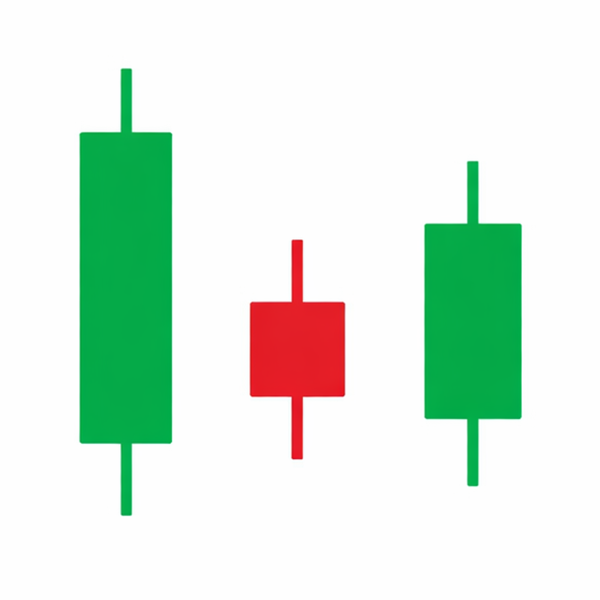
Candlestick patterns provide insight into short-term sentiment shifts. Key patterns include doji candles (indecision), engulfing patterns (reversal signals), pin bars (rejection of a price level), and inside bars (consolidation before a breakout). These patterns are most reliable when they form at significant support or resistance levels.
Popular technical indicators include RSI (Relative Strength Index) for identifying overbought and oversold conditions, MACD (Moving Average Convergence Divergence) for trend momentum, and Bollinger Bands for volatility measurement. However, avoid indicator overload. Two or three well-understood indicators combined with price action analysis is far more effective than a chart cluttered with dozens of studies. See our indicator guides for detailed explanations of each tool and how to apply them in live markets.
“Selecting the right broker is one of the most consequential decisions a forex trader makes.”
9Choosing a Forex Broker
Selecting the right broker is one of the most consequential decisions a forex trader makes. A poor choice can result in excessive costs, unreliable execution, or worse, loss of funds to an unregulated entity. Start by verifying regulatory status. Tier-1 regulators include the FCA (UK), ASIC (Australia), CFTC/NFA (US), BaFin (Germany), and FINMA (Switzerland). Tier-1 regulation means segregated client funds, negative balance protection, and a complaints resolution process.
Execution model matters significantly. ECN/STP brokers route your orders directly to liquidity providers, offering tighter spreads but charging a commission (typically $3-7 per standard lot round trip). Market maker brokers take the other side of your trade and may offer fixed spreads with no commission. Neither model is inherently better, but transparency about execution policies is essential. Look for brokers that publish execution statistics, including average fill times and slippage data.
Cost comparison should include the full picture: spreads, commissions, swap rates, deposit and withdrawal fees, and inactivity charges. A broker advertising zero-pip spreads but charging $7 per lot commission may cost more than one offering 1.2-pip spreads with no commission, depending on your trading frequency and style.
Platform quality directly impacts your trading performance. MetaTrader 5 remains the industry standard for retail forex, offering robust charting, Expert Advisor automation, and a vast library of custom indicators. Ensure your broker supports MT5 and provides reliable server connectivity with minimal downtime.
Additional factors to evaluate include minimum deposit requirements, available currency pairs and other instruments, customer support responsiveness, educational resources, and the quality of the broker's mobile app. Demo accounts are invaluable for testing execution quality before committing real capital. Browse our broker reviews for in-depth, unbiased assessments of the leading forex brokers, including fee comparisons and user experience ratings.
10Risk Management Essentials
Risk management is the single most important skill in forex trading. No strategy, no matter how profitable, can survive without disciplined risk control. The markets are inherently uncertain, and even the best setups fail a significant percentage of the time. Your job as a trader is not to be right on every trade but to ensure that your winners outweigh your losers over time.
The cornerstone of risk management is the per-trade risk limit. Most professional traders risk between 0.5% and 2% of their account equity on any single trade. On a $10,000 account risking 1%, the maximum loss per trade is $100. This approach ensures that a string of losing trades, which is statistically inevitable, does not destroy your account. Even ten consecutive losses at 1% risk would only draw down your account by approximately 9.6%.
Position sizing ties directly to your risk limit. Once you define your maximum dollar risk per trade and your stop-loss distance in pips, the position size is mathematically determined. For example, risking $100 with a 25-pip stop on EUR/USD requires a position of 0.4 standard lots ($10 per pip times 0.4 equals $4 per pip times 25 pips equals $100 risk). Never reverse-engineer this calculation by choosing your lot size first.
The risk-reward ratio evaluates whether a trade is worth taking. A minimum 1:2 risk-reward ratio means your potential profit is at least twice your potential loss. With a 1:2 ratio, you only need to win 34% of your trades to break even. Consistently targeting 1:2 or better setups creates a statistical edge even with a modest win rate.
Diversification across uncorrelated pairs, using stop losses on every trade without exception, and avoiding overtrading during revenge-trading emotions are all critical components. Consider implementing a maximum daily loss limit. If you lose 3% of your account in a single day, stop trading and review your decisions with a clear head. Use our risk management calculator to plan every trade before you click the button.
“A trading plan is a comprehensive document that defines every aspect of your trading activity, from strategy rules to risk parameters to psychological guidelines.”
11Building a Forex Trading Plan
A trading plan is a comprehensive document that defines every aspect of your trading activity, from strategy rules to risk parameters to psychological guidelines. Trading without a plan is gambling. Trading with a plan and following it consistently is a business.
Start with your trading goals and constraints. Are you a full-time trader or managing positions around a day job? What is your available capital, and what realistic monthly return target is appropriate for your risk tolerance? For most retail traders, targeting 3-8% monthly returns with maximum 15-20% drawdown is both achievable and sustainable. Anything promising higher returns with lower risk should be viewed with extreme skepticism.
Define your strategy rules with precision. This includes your setup criteria (what conditions must be met before you consider a trade), entry triggers (the specific signal that initiates the trade), stop-loss placement (based on technical levels, not arbitrary pip counts), take-profit targets (defined by support, resistance, or risk-reward ratios), and trade management rules (when to move stops to breakeven, when to take partial profits).
Your plan should include a detailed risk management section specifying per-trade risk percentage, maximum daily loss, maximum weekly loss, maximum number of simultaneous positions, and rules for scaling in or out of positions. These parameters should be treated as non-negotiable rules, not guidelines to be bent when emotions run high.
Keep a trading journal to track every trade, including the rationale for entry, screenshots of the setup, emotional state, and the outcome. Review your journal weekly to identify patterns in your decision-making. Over time, this data becomes invaluable for refining your strategy and eliminating recurring mistakes.
Finally, schedule regular plan reviews. Markets evolve, and a strategy that worked in a trending environment may underperform in a ranging market. Monthly or quarterly reviews allow you to adapt your approach while maintaining the discipline of a structured framework. The best traders are not the most aggressive but the most consistent.
Frequently Asked Questions
Q1How much money do I need to start forex trading?
You can start forex trading with as little as $50-100 at brokers offering micro or nano lots. However, most professionals recommend starting with at least $500-1,000 to allow proper position sizing with 1-2% risk per trade. With a $500 account trading micro lots, a 1% risk per trade equals $5, which gives you meaningful room to place stop losses without being forced into excessively tight stops. Remember that undercapitalization is one of the leading causes of retail trader failure because it forces excessive leverage.
Q2What are the best currency pairs for beginners?
Beginners should focus on major pairs, particularly EUR/USD, GBP/USD, and USD/JPY. These pairs offer the tightest spreads, deepest liquidity, and most predictable behavior around economic events. EUR/USD is the most traded pair globally with typical spreads of 0.1-1.5 pips, making it forgiving for new traders learning to manage costs. Avoid exotic pairs until you have at least six months of consistent trading experience, as their wider spreads and erratic volatility can quickly erode a small account.
Q3Is forex trading profitable?
Forex trading can be profitable, but the statistics are sobering: regulatory disclosures show that 70-80% of retail forex accounts lose money. The traders who succeed consistently share common traits: strict risk management, a tested strategy with a statistical edge, emotional discipline, and sufficient capitalization. Profitability in forex is not about finding a secret indicator but about managing risk effectively over hundreds of trades. Treat it as a skill that takes 1-2 years of deliberate practice to develop, similar to any professional discipline.
Q4What is the difference between a pip and a point?
A pip is the fourth decimal place in most currency pairs (0.0001) and the second decimal place in yen pairs (0.01). A point, in MT5 terminology, is the smallest price increment the platform displays, which is typically a pipette or one-tenth of a pip (0.00001 for most pairs). So 1 pip equals 10 points in MetaTrader 5. This distinction matters when setting stop losses or take profits in MT5, as the platform uses points by default. Always verify whether your broker quotes in 4 or 5 decimal places to avoid position sizing errors.
Q5What is the best time to trade forex?
The best time to trade depends on your strategy and the pairs you trade. The London-New York overlap (13:00-17:00 GMT) offers the highest liquidity and volatility for major pairs, making it ideal for day traders. The Tokyo session (00:00-09:00 GMT) is best for yen pairs and AUD/NZD crosses. Avoid trading during low-liquidity periods like the last hour of the New York session or the gap between New York close and Sydney open, as spreads widen and price action becomes erratic. Consistency matters more than finding the perfect hour.
Q6How does leverage work in forex?
Leverage lets you control a position larger than your account balance by borrowing from your broker. With 50:1 leverage, $1,000 in margin controls a $50,000 position. If the trade moves 1% in your favor, you gain $500 (50% return on your margin). But if it moves 1% against you, you lose $500, half your margin. Leverage amplifies both gains and losses equally. Regulated brokers cap leverage at 30:1 to 50:1 for retail traders, and professional traders typically use no more than 10:1 effective leverage regardless of the maximum available.
Q7Should I use a demo account before trading live?
Absolutely. A demo account is essential for learning platform mechanics, testing strategies, and building confidence without financial risk. Spend at least 2-3 months on demo, treating it as seriously as a live account with realistic position sizes. However, be aware that demo trading cannot replicate the psychological pressure of real money. Many traders perform well on demo and struggle live because fear and greed influence their decisions. Consider transitioning to a small live account ($200-500) after demonstrating consistent demo profitability over at least 50-100 trades.
Q8What is a spread in forex trading?
The spread is the difference between the bid price (what you receive when selling) and the ask price (what you pay when buying). It represents the broker's primary revenue on each trade and is effectively your transaction cost. For EUR/USD, spreads range from 0.0 pips on raw ECN accounts (plus commission) to 1.5 pips on standard accounts. Tighter spreads reduce your breakeven distance, which is particularly important for scalpers taking small pip targets. Always factor spread costs into your strategy's expected profitability.
Q9Can I trade forex on my phone?
Yes, both MetaTrader 5 and most broker-specific apps offer full mobile trading capabilities including charting, order placement, and account management. However, mobile trading has limitations: smaller screens make technical analysis less precise, and the temptation to overtrade or make impulsive decisions increases without the structure of a desktop environment. Use mobile primarily for monitoring and managing existing positions rather than conducting detailed analysis or entering new trades. For serious analysis and execution, a desktop setup remains the professional standard.
Q10How do I manage risk when trading forex?
Effective risk management follows four pillars: never risk more than 1-2% of your account per trade, always use a stop loss, maintain a minimum 1:2 risk-reward ratio, and limit correlated exposure. Calculate your position size based on your stop-loss distance and risk percentage before every trade. Set a daily maximum loss (typically 3-5% of equity) and stop trading if you hit it. Avoid adding to losing positions and never move a stop loss further away from entry. Tools like Pulsar Terminal automate position sizing and offer prop firm protection features that enforce these rules systematically.
Risk Disclaimer
Trading financial instruments carries significant risk and may not be suitable for all investors. Past performance does not guarantee future results. This content is for educational purposes only and should not be considered investment advice. Always conduct your own research before trading.
Related Guides

Optimize Your Trading with Pulsar Terminal
All these calculators are built into Pulsar Terminal with real-time data from your MT5 account. One-click position sizing, automatic risk management, and instant calculations.
Get Pulsar Terminal